Art and Antiques Resources: A Curated Directory
A curated, unsponsored guide to the museum collections, research databases, dealer associations, collector societies and journals worth knowing about.
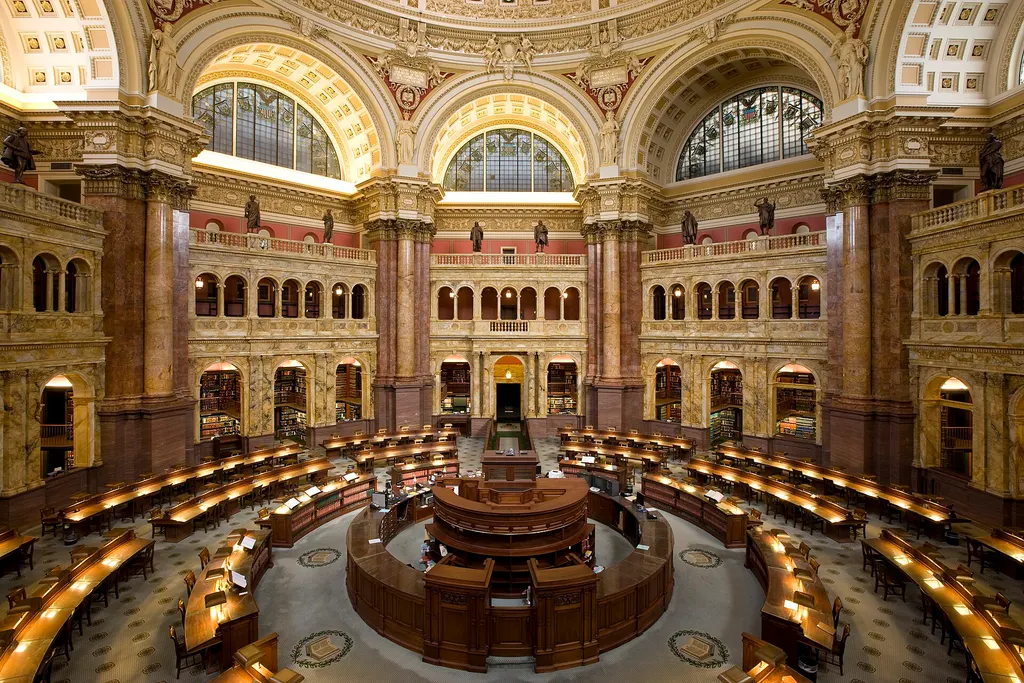
Carol M. HighsmithLOC Main Reading Room Highsmith, 2009Wikimedia Commons, collection record. Public domain
Say you have inherited a small, dark oil painting of a river at dusk. There is a faint signature, a scrap of an old exhibition label on the stretcher, and a family story that it came "from a dealer in The Hague". Where do you begin? Not, ideally, with a general web search that returns a hundred lookalike pictures and a dozen companies offering instant valuations.
The quickest route to reliable answers runs through a fairly small number of institutions: museums that publish their collections openly, research databases built by art historians, trade bodies whose members sign up to codes of practice, and the societies and journals where specialists share what they know. This directory gathers the ones we consider genuinely useful, explains what each is for, and notes its limits. Nothing here is a paid listing, and inclusion is not an endorsement of any individual dealer or service.
Museum collections you can search from home
Major museums now publish much of their collections online, often with high-resolution images that can be downloaded and reused freely. They are the best place to see what a securely documented example of almost anything looks like.
- The Metropolitan Museum of Art, New York: a vast online collection spanning every period and culture, with public-domain images released under its Open Access programme, and the scholarly essays of the Heilbrunn Timeline of Art History.
- Rijksmuseum, Amsterdam: superb for Dutch painting, prints, silver, Delftware and furniture, with downloadable images and detailed object records.
- Victoria and Albert Museum, London: the world's leading museum of art and design, with deep online records for ceramics, textiles, furniture, metalwork and jewellery.
- National Gallery of Art, Washington, and Art Institute of Chicago: both offer open-access images of public-domain works, with good provenance notes.
- Art UK: an online home for artworks in UK public collections, including many paintings and sculptures held by small regional museums, town halls and hospitals that are rarely on display.
Our practical guide to open-access museum collections explains how to search these sites well and what their image licences allow.
A tip for comparison. When you think you have found a "match" for your object in a museum collection, read the whole catalogue record, not just the caption. Materials, dimensions, marks and provenance are usually listed in full, and they will tell you far more than the photograph.
Research databases and reference tools
These are the tools specialists use every day. Most are free; a few require a subscription, which many public and university libraries provide.
RKD – Netherlands Institute for Art History
Based in The Hague, the RKD holds one of the largest art-historical archives and photographic documentation centres in the world, centred on Netherlandish art but reaching well beyond it. Its online research portal, RKD Research, brings together millions of records on artists, works of art, collections and literature. For anyone researching a Dutch or Flemish picture, the artist records alone (with dates, places of activity, teachers and pupils) are an essential first stop.
The Getty Provenance Index
Compiled by the Getty Research Institute in Los Angeles, the Provenance Index transcribes historical sources on the ownership and sale of works of art: auction catalogues, archival inventories of collections, and dealers' stock books. It is the closest thing the field has to a searchable memory of the art market, and it is free to use. Our article on provenance explains how records like these are used to reconstruct a work's ownership history.
Vocabularies and digitised literature
- Getty Vocabularies (the Art & Architecture Thesaurus, the Union List of Artist Names and the Thesaurus of Geographic Names): authoritative names, dates and terms, useful for untangling variant spellings of artists and places.
- Digitised auction catalogues: Heidelberg University Library, working with partners including the Getty, has digitised thousands of German-language sale catalogues from the first half of the twentieth century, an invaluable source for provenance research.
- Grove Art Online (Oxford Art Online): the standard scholarly encyclopedia of art, usually available through a library subscription.
Stolen art and due diligence
Before buying anything of significant value, check it against a stolen-art register. Commercial services such as the Art Loss Register maintain large databases of stolen and disputed objects, and several police forces and international agencies run their own. Our separate guide to stolen art registers explains which databases exist and what a search can and cannot prove.
Trade associations for art and antique dealers
A trade association does not guarantee every object, but it does mean the dealer has been vetted for expertise and has agreed to a code of conduct, and it usually gives buyers somewhere to turn if a dispute arises.
| Association | Where | What it offers buyers |
|---|---|---|
| CINOA | International | A confederation, founded in 1935, of art and antique dealers' associations around the world; works on ethics, due diligence and cultural-property regulation |
| BADA (The British Antique Dealers' Association) | United Kingdom | A long-established association of vetted dealers, with an online dealer directory |
| LAPADA (The Association of Art & Antique Dealers) | United Kingdom, with international members | Members bound by a Code of Practice covering description and labelling; a conciliation service for disputes |
| ADA (Antiques Dealers' Association of America) | United States | A non-profit trade association established in 1984, with a member directory |
Many countries have their own national associations, and most are members of CINOA, so its website is a useful starting point if you are buying abroad. Major vetted fairs, where independent committees examine objects before the doors open, are another layer of protection.
Look closer: Before you buy from any dealer, ask for a written invoice that describes the object, its date, any restoration and its known provenance. A reputable dealer will expect the question and answer it in writing. Our article on collecting art responsibly covers what else to ask.
Collector societies
Specialist societies are where much of the most careful research on decorative arts and antiques happens, often published in journals that are cited by museum curators. Most welcome interested beginners.
- The Furniture History Society (UK): publishes the annual journal Furniture History and organises visits to historic houses and collections.
- The Silver Society (UK, international membership): founded in 1958 to promote the study of silver of all periods and places; publishes The Silver Society Journal.
- The English Ceramic Circle (UK): founded in 1927, the oldest society devoted to the study of British ceramics and enamels, with an annual journal of Transactions.
- The Oriental Ceramic Society (UK): a long-established society for the study of Chinese, Japanese, Korean and other Asian ceramics and related arts.
- The Antiquarian Horological Society: devoted to the history of timekeeping, with a quarterly learned journal and meetings open to all.
- The International Map Collectors' Society (IMCoS): publishes a quarterly journal on the history of cartography, holds an international symposium each year, and offers members online access to its back issues.
Magazines and journals
- The Burlington Magazine: the monthly journal of record for the fine and decorative arts, founded in London in 1903; scholarly but readable, and strong on new attributions and exhibition reviews.
- Apollo: a monthly international art magazine founded in 1925, covering old masters to contemporary art, collecting and museums.
- Antiques Trade Gazette: the weekly newspaper of the UK art and antiques trade, useful for auction reports and market news.
- The Magazine Antiques: a long-running American magazine on decorative arts, architecture and collecting.
Using this directory well
Treat the resources above as layers rather than alternatives:
- Start with museums to understand what authentic, documented examples look like.
- Move to research databases (RKD, the Getty Provenance Index, Art UK) to establish the facts about an artist, maker or past owner.
- Consult a specialist: a society member, a museum curator on an identification day, or a dealer belonging to a recognised association.
- Check before buying, using stolen-art registers and written invoices.
- For values, see our guide to researching what art is worth; price databases and auction records sit alongside, not in place of, expert opinion.
More guides to museums and research can be found under museums and galleries.
Sources
- RKD – Netherlands Institute for Art History, RKD
- Getty Provenance Index, Getty Research Institute
- CINOA, CINOA
- The British Antique Dealers' Association, BADA
- Antiques Dealers' Association of America, ADA
- International Map Collectors' Society, IMCoS