Museum Activities for Families
Practical, tested-in-the-gallery activities for families: detail hunts, sketching, posing, storytelling and curator games that work for toddlers to teens.
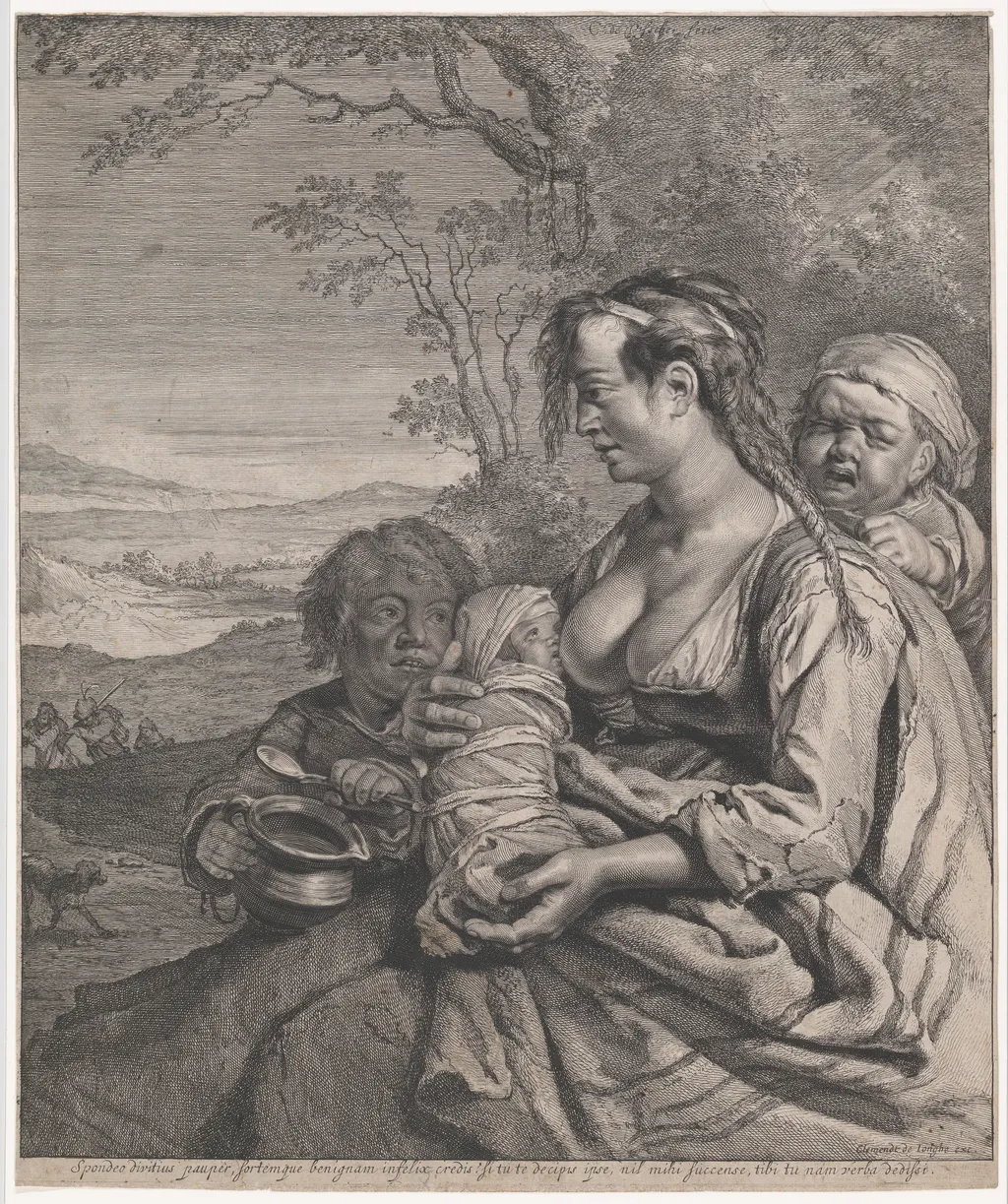
Cornelis VisscherRoma Mother with Children, c. 1657; this state printed 1658 or laterEtching and engraving; fourth state of fiveThe Metropolitan Museum of Art, collection record. CC0 1.0 (Public Domain)
Picture a seven-year-old in front of Pieter Bruegel's Hunters in the Snow (1565) in Vienna's Kunsthistorisches Museum. Asked "Do you like it?", she shrugs. Asked instead "Can you find the fox?", she steps closer, scans the line of tired hunters trudging downhill, and spots the small, limp animal slung from a spear. Then she notices the skaters on the frozen ponds below, the bonfire outside the inn, the birds on the bare branches. Five minutes later she is still looking.
That is the whole secret of a good family museum visit: give children something to do with their eyes, hands and imaginations, and the art does the rest. Questions that start a search, a story or a sketch work far better than questions that ask for a verdict.
What follows is a toolkit of activities that need little or no preparation, organised by what they ask children to do, with notes on which ages they suit and how to keep everyone, including the adults, from flagging.
Before you go: plan small
The most common mistake is trying to see too much. For most families, an hour of real looking in a handful of rooms beats a three-hour march past everything. A few habits make the difference:
- Choose three to five works in advance. Many museums publish their collections online; browsing them together the night before builds anticipation. Our guide to open-access museum collections explains where to find high-quality images.
- Pick a theme. Animals, food, hats, boats, weather, monsters, hidden pets. A theme turns a random walk into a quest.
- Check the family offer. Many large museums run free trails, backpacks, drop-in workshops or family tours. The National Gallery in London, for example, runs free drop-in family activities at weekends and in school holidays from its Roden Centre for Creative Learning. Times change, so check the museum's own website.
- Check the rules for drawing materials. Many museums allow sketching with pencils only, and ban pens, markers, paints and charcoal from the galleries. The Metropolitan Museum of Art and the Museum of Modern Art in New York both limit gallery sketching to pencils. Pack pencils, a small sketchbook and nothing wet.
- Plan the exit. Know where the café, toilets, garden or shop are, and agree beforehand on one postcard each as the souvenir.
Looking games
These activities slow children down without them noticing.
Detail hunt
Before entering a room, choose one painting and describe a small detail aloud ("a dog with a red collar", "a broken jug", "someone who looks bored"). Children race to find it. Older children can set the challenges for adults. Busy, crowded pictures such as Bruegel's scenes of village life, Dutch market paintings, or large battle pieces are ideal.
Colour hunt
Bring three or four paint-colour sample cards from a hardware shop. Children find the closest match to each colour somewhere in a painting, then explain where. It sharpens attention to colour and gets them talking about how artists mix and place it.
One minute, then close your eyes
Look at a painting in silence for one full minute (time it on a phone). Then turn around, or close your eyes, and take turns naming everything you remember. Turn back and see what everyone missed. Children are often astonished by how much a minute holds.
See, think, wonder
Harvard's Project Zero developed a simple thinking routine that works well in front of any object: What do you see? What do you think about that? What does it make you wonder? Insisting on "see" first keeps the conversation anchored in evidence, and the "wonder" step licenses questions nobody can answer, which children love.
Moving and making
Not every child wants to stand still. These activities use the body, the voice and the pencil.
Freeze-frame
In front of a sculpture or a painting with figures, everyone copies a pose exactly, then holds it for ten seconds. How does it feel? Which muscles ache? What might the person be about to do? Then "unfreeze" into the next moment. This works brilliantly with Greek and Roman statues and Baroque paintings full of gesture.
Soundtrack the picture
Quietly, decide what the painting would sound like. Wind? Church bells? Squabbling? Silence? A storm at sea suggests something different from a still life with a ticking clock. Older children can suggest a piece of music.
Sketch one thing
Rather than copying a whole painting, choose one object (a teapot, a hand, a helmet) and draw it in two minutes. Then draw it again more slowly. Sculpture galleries are often the best for sketching because you can walk around a figure and draw it from several sides. For more ideas to take home, see art activities inspired by famous artists.
Safety: Keep a safe distance from artworks and plinths, especially with small children and backpacks; never let children lean on display cases or barriers. Use only pencils for sketching unless the museum says otherwise, and keep pencils sheathed when walking. Agree a meeting point in case anyone gets separated, and make sure young children know to ask a uniformed member of staff for help.
Storytelling and role play
What happens next?
Choose a picture with people in it. Each family member adds one sentence to a story that begins in the painting. Someone must eventually explain why the dog is there. Narrative paintings, genre scenes and history pictures make the best starting points; so do portraits ("Where is she going after this?").
Speech bubbles
Imagine what each figure is saying or thinking. Children quickly start noticing glances, gestures and expressions, which is exactly what painters used to tell stories. You can carry the game home by drawing speech bubbles on a printed reproduction.
Be the curator
At the end of the visit, each person chooses their favourite object and writes or dictates a short museum label for it: title, maker (if known), and two sentences on why it matters. Teenagers often take this seriously, and it pairs well with reading the real label afterwards to compare.
Matching activities to ages
Children vary widely, so treat these as starting points rather than rules.
| Age | Typical attention in front of one work | Activities that often work |
|---|---|---|
| Under 5 | Very short; best with movement and sound | Animal spotting, colour hunts, freeze-frame, soundtrack |
| 5–8 | A few minutes with a clear task | Detail hunts, one-minute memory, speech bubbles, quick sketches |
| 9–12 | Longer when given responsibility | See-think-wonder, curator labels, sketching from several angles, leading the family to a chosen work |
| Teenagers | Varies; respond to being treated as equals | Choosing the route, photographing details (where allowed), debating attributions or meanings, comparing works across rooms |
Keeping the visit enjoyable
A few small rules of thumb help a great deal:
- Follow the child's interest. If a nine-year-old wants to spend twenty minutes with the armour, let them. Interest built in one room transfers to others.
- Sit down often. Museum benches exist for a reason, and floors are usually fine if you keep clear of walkways.
- Leave before they want to. End on a high point so the next visit is welcome.
- Read labels selectively. Adults can skim and pass on one surprising fact rather than reading every word aloud.
- Take the conversation home. Look the favourite work up online, print it, draw it again or tell its story at dinner.
For ideas about introducing artists, periods and styles at home, read how to introduce children to art history; and for adults who want to manage their own energy in a large museum, our guide how to visit an art museum without getting overwhelmed offers more strategies. More guides to galleries and collections are gathered on the museums and galleries topic page.
A pocket checklist
- Three to five chosen works, plus a theme
- Pencils, a small sketchbook, paint-colour cards
- The museum's family trail or map
- An agreed meeting point
- Snacks for the café, not the galleries
- One postcard each to take home
Sources
- See, Think, Wonder (thinking routine), Project Zero, Harvard Graduate School of Education
- Visit as a family, The National Gallery, London
- Visitor Guidelines, The Metropolitan Museum of Art
- Hunters in the Snow (Winter), Pieter Bruegel the Elder, Kunsthistorisches Museum Vienna