How to Visit an Art Museum Without Getting Overwhelmed
Museum fatigue is real. Here is how to plan, pace and look so that a visit to a large art museum leaves you energised rather than exhausted.
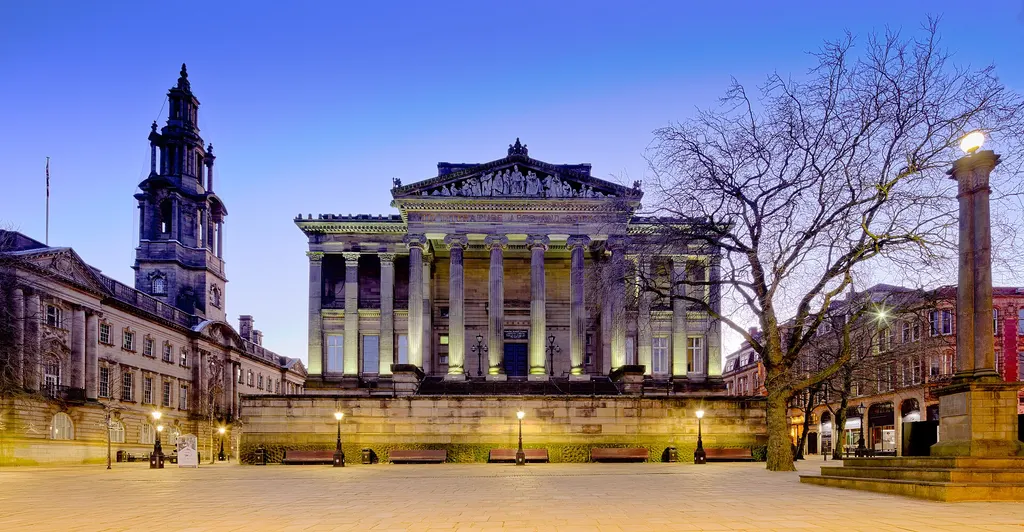
Michael D BeckwithThe Harris Museum, Art Gallery & Library, 2022-03-05 07:27:37Wikimedia Commons, collection record. CC0 1.0 (Public Domain)
In January 1916 Benjamin Ives Gilman, secretary of the Museum of Fine Arts in Boston, published an article in The Scientific Monthly with a title that still rings true: "Museum Fatigue". He illustrated it with photographs of a visitor bending, crouching and craning to examine objects placed too low, too high or too deep in their cases. Gilman's point was that exhaustion in museums was not a sign of philistinism. It was a predictable result of how displays asked people to use their bodies and their attention.
More than a century later, most of us still know the feeling: the heavy legs after the third hour, the moment when masterpieces start to blur into wallpaper, the guilt at skipping whole wings. The good news is that museum fatigue can be managed. It is less a matter of stamina than of strategy.
This guide covers how to plan a visit to a large art museum, how to pace it, and how to look at individual works so that they stay with you afterwards.
Why museums wear us out
Gilman blamed physical strain: walking on hard floors, standing still, stooping over cases, reading small labels. Later researchers have added the mental side. Every gallery presents dozens of objects competing for attention, and the brain keeps making small decisions (look or pass? read or skip?) until it simply stops.
Studies of how long people spend in front of artworks show how quickly attention is spent. In a frequently cited study at the Metropolitan Museum of Art, published in 2001, the psychologists Jeffrey and Lisa Smith observed visitors looking at a small group of famous paintings and recorded a mean viewing time of 27.2 seconds and a median of 17 seconds per work. A later study by Smith and colleagues at the Art Institute of Chicago reported very similar figures. Half a minute is long enough to recognise a picture, but not to see it.
The solution is not to force yourself to look longer at everything. It is to look at fewer things, better.
Before you go: make three decisions
1. Decide what you are not going to see
Large encyclopaedic museums can hold tens of thousands of objects on display. Nobody sees them all in a day, and nobody should try. Choose one wing, one period or one theme, and accept that the rest will be there next time. If you are travelling and this is your one chance, choose a small number of must-see works and route yourself between them.
2. Decide when to go
Museums are usually quietest on weekday mornings and in the last hours before closing, and busiest at weekends and in school holidays. Many offer late openings or free days; these can be lively but crowded. If you can, aim for a time when you will have room to stand back from a picture.
3. Decide how you will travel light
Large bags often have to be checked, and cloakroom queues eat time and energy. Bring a small bag, a bottle of water for breaks outside the galleries, a pencil and a notebook if you like to sketch (many museums allow pencils but not pens or paints; check the visitor rules), and comfortable shoes.
Pacing a visit
Think of a museum visit as a series of short, focused episodes separated by rests, rather than one long walk.
| Time | What to do |
|---|---|
| First 10 minutes | Get your bearings. Pick up a map, find the toilets, café and benches, and walk straight to your first chosen room without stopping. |
| Next 40–60 minutes | Your best attention. Spend it on your three to five main works, with a longer look at one of them. |
| Break (15–20 minutes) | Sit down away from the art. Have a drink. Do not read the guidebook. |
| Second session (30–45 minutes) | Wander more freely in a nearby gallery, or return to the work you liked most. |
| Last 10 minutes | Go back to one picture for a final look, or choose a postcard. Leave before you are tired. |
Smaller museums can be the antidote to big-museum overload. A house museum, a single-collection gallery or a historic interior, such as the Rembrandt House Museum in Amsterdam, can be seen thoroughly in an hour or two and gives a strong sense of context.
How to look at one work properly
Choosing to give a single painting ten minutes changes the whole experience. This simple sequence works for almost anything.
- Look from a distance first. Stand far enough back to see the whole work as a design. Where are the darks and lights? What shapes dominate? Where does your eye go first, and where does it travel next?
- Move closer. Approach slowly. Notice brushwork, surface texture, cracks, changes the artist made (sometimes visible as ghostly outlines), and details invisible from afar.
- Name what you see before deciding what it means. Harvard's Project Zero suggests a simple order: what do you see, what do you think about it, what does it make you wonder? Staying with "see" for a while keeps you from jumping to conclusions.
- Ask practical questions. What is it made of? How big is it, and why might it be that size? Where was it meant to hang: a church, a palace, a private room?
- Only now read the label. Compare what it tells you with what you noticed. Did it confirm a hunch, or surprise you?
- Look again. Spend a final minute with the work in the light of the label. Many people find this is when the picture really opens up.
For a fuller method, especially for older paintings full of symbols and stories, see how to appreciate a historical painting and reading the symbols in still life painting.
Look closer: Try sketching part of the work, even badly. Drawing forces you to notice proportions, angles and relationships that the eye skims over. Two minutes with a pencil can be worth twenty minutes of glancing.
Labels, audio guides and phones
Interpretive tools help, but each can also hijack your attention.
- Labels: Read them after looking, not before. You will remember more, and your own impressions will not be crowded out.
- Audio guides and apps: Use them for your chosen works rather than playing every stop in sequence. Pausing the guide and simply looking for a minute is perfectly allowed.
- Photography: Where permitted (flash is almost always banned), photographing details can be a way of looking more closely. Photographing every wall label so that you can "read it later" usually means not looking at all.
- Guided tours: A good tour by a museum guide or educator is one of the best ways to see a few works in depth. Many are free with admission.
Slow looking as a habit
The idea of deliberately slowing down has become a movement. Slow Art Day, which grew out of an experiment by Phyl Terry in 2008 and was first organised across a number of museums in 2009, is held each April: participants look at a small set of works for several minutes each and then talk about what they saw over lunch or in the gallery. You do not need an organised event to try it. Choose one work on every visit and give it ten undistracted minutes.
If you are visiting with children, the pacing needs are different again; our guide to museum activities for families has games and strategies that keep all ages engaged.
A checklist for your next visit
- One focus: a wing, a period, a theme or a short list of works.
- The right time: a quiet weekday slot or a late opening.
- Light luggage: small bag, comfortable shoes, pencil and notebook.
- Built-in breaks: at least one proper sit-down away from the art.
- One long look: ten minutes with a single work, label read last.
- An early exit: leave while you still want more.
- A follow-up: look up your favourite work at home, or read its story; ten famous paintings and the stories behind them is a good place to start.
Gilman's diagnosis was that museums tired people because they were designed without enough thought for the visitor. You cannot redesign the galleries, but you can redesign your visit.
Sources
- Museum Fatigue, by Benjamin Ives Gilman (The Scientific Monthly, 1916), JSTOR / American Association for the Advancement of Science
- Slow Art Day: History, Slow Art Day
- See, Think, Wonder (thinking routine), Project Zero, Harvard Graduate School of Education
- Visitor Guidelines, The Metropolitan Museum of Art