Rembrandt and the Rembrandt House Museum, Amsterdam
The Jodenbreestraat house where Rembrandt lived from 1639 to 1658, how a bankruptcy inventory let it be reconstructed, and how to get the most from a visit.
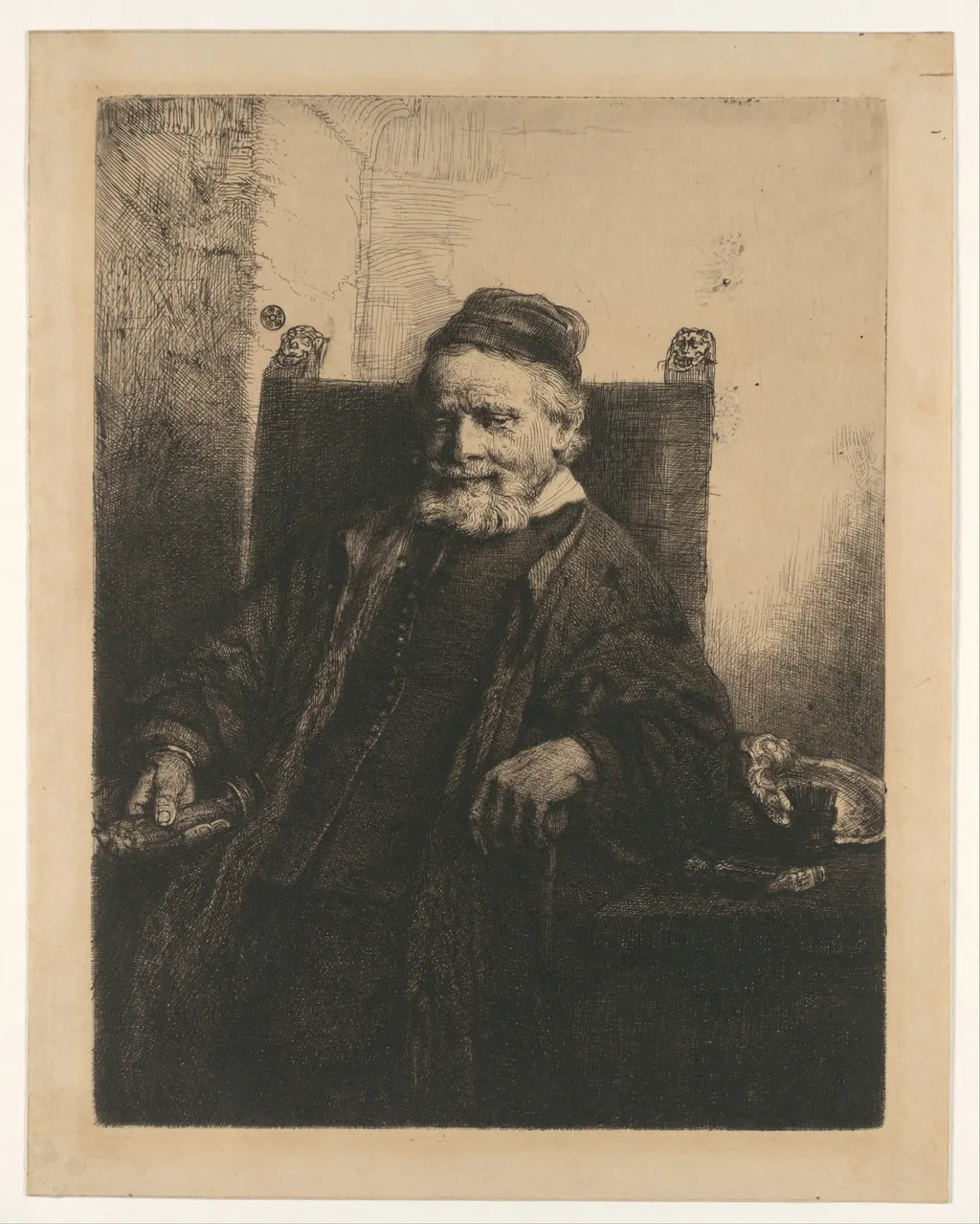
Rembrandt (Rembrandt van Rijn)Jan Lutma, 1656Etching, engraving, and drypoint on Japanese paper; first of four statesThe Metropolitan Museum of Art, collection record. CC0 1.0 (Public Domain)
In July 1656 a clerk of Amsterdam's insolvency office walked through a large house on the street then known as the Sint-Antoniesbreestraat and wrote down everything he saw, room by room: paintings, plaster casts, weapons, shells, a chest of drawings, the beds and the kitchenware. The owner was Rembrandt van Rijn, the most celebrated painter in the city, who had been forced to surrender his property to his creditors.
That inventory was a disaster for Rembrandt. For us it is a gift. More than two and a half centuries later it allowed the house to be furnished again much as he knew it, and today the Rembrandt House Museum (Museum Het Rembrandthuis) at Jodenbreestraat 4 is one of the most evocative artists' houses in Europe. Here is the story of the house, what you will find inside, and how to plan a visit.
A house beyond his means
The house was built around 1606 and remodelled around 1627, when it gained an extra storey and a new facade in the classical taste. In January 1639 Rembrandt, then in his early thirties and at the height of his early success, agreed to buy it for 13,000 guilders, a very large sum to be paid in instalments.
It was a confident move. Rembrandt had married Saskia van Uylenburgh in 1634, and the house stood in a prosperous neighbourhood where wealthy merchants, many of them Portuguese Jewish families, and artists and art dealers lived side by side. Rembrandt's own former teacher in Amsterdam, Pieter Lastman, had lived nearby, as had Saskia's cousin, the art dealer Hendrick Uylenburgh, with whom Rembrandt had lodged when he first came to the city.
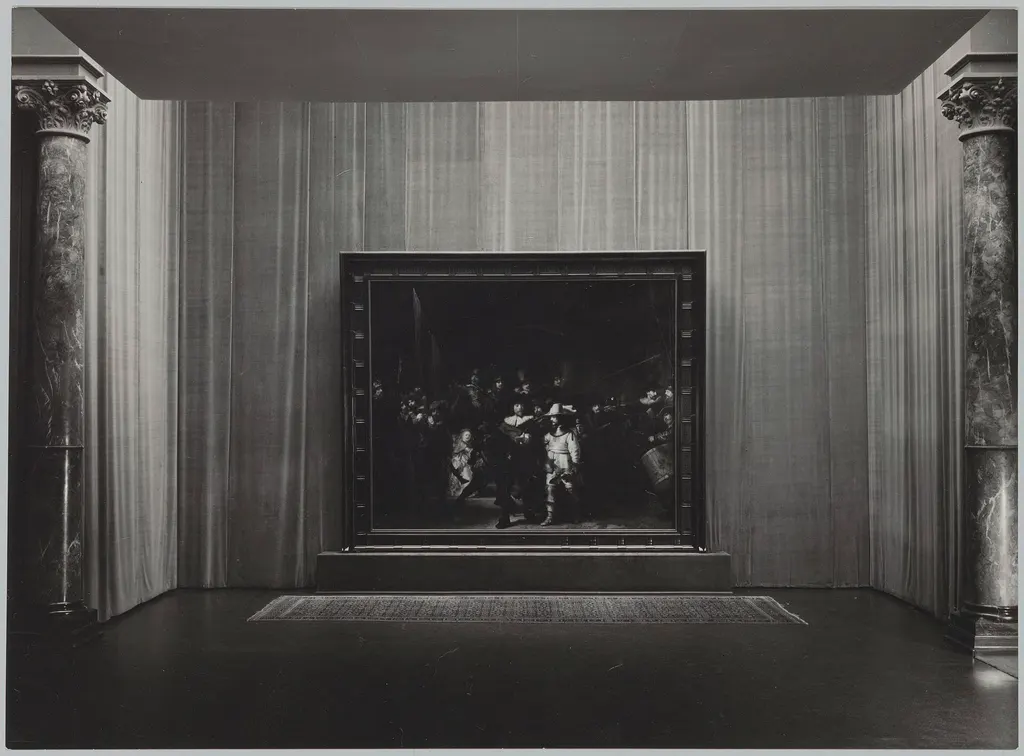
The years in the house brought both triumph and grief. The couple's son Titus was born in 1641, the only one of their children to survive infancy, and Saskia died in 1642, the year Rembrandt completed the vast militia painting now known as The Night Watch. Later, Hendrickje Stoffels joined the household; their daughter Cornelia was born in 1654.
Bankruptcy and the 1656 inventory
Rembrandt never paid off the house. Through the 1650s his debts mounted, worsened by his lavish spending on art and curiosities and by a difficult economic climate. In 1656 he applied for a procedure that allowed a debtor to surrender his assets to creditors rather than face imprisonment, and the inventory was drawn up. His possessions were sold in a series of auctions, and the house itself was sold for 11,000 guilders. In 1658 Rembrandt and his family moved to a rented house on the Rozengracht, in the Jordaan, where he lived until his death in 1669.
The 1656 inventory lists the contents of each room separately. That is why the museum can say, with unusual confidence, which room was the entrance hall hung with paintings for sale, which was Rembrandt's studio, and where he kept his collection of art and natural curiosities.
From private house to museum
After Rembrandt left, the house passed through many owners and was altered repeatedly. In 1907 the City of Amsterdam bought it and handed it to a foundation set up to create a museum, an initiative in which the painter Jozef Israëls played a leading part. The architect Karel de Bazel restored the building, and the museum opened on 10 June 1911.
For much of the twentieth century the house showed Rembrandt's prints in largely empty rooms. Later restoration work used the 1656 inventory, period paintings and documentary research to furnish the interiors with seventeenth-century objects that match the descriptions, so that the visitor now moves through rooms that feel lived in.
What you will see
The domestic rooms
On the ground floor are the entrance hall, where Rembrandt displayed paintings for sale, and a sequence of reception rooms furnished with paintings and box beds, the enclosed beds built into the panelling that were common in Dutch houses. The kitchen, with its tiled walls and open hearth, is in the basement.
The studio
Upstairs is the large studio, with tall windows that fill the room with an even, cool light. Easels, pigments and studio props are arranged as they might have been. In the museum's daily demonstrations, educators show how seventeenth-century painters ground pigments into oil and prepared their canvases.
The art cabinet
Rembrandt's kunstkamer, his cabinet of art and curiosities, has been reconstructed with the kinds of things the inventory lists: shells, coral, minerals, stuffed animals, classical busts, weapons and ethnographic objects. It is a striking reminder that Rembrandt collected as eagerly as he painted.
The prints
The museum holds an almost complete collection of Rembrandt's etchings, together with some of his original copper plates and works by his teacher Lastman and pupils such as Ferdinand Bol and Govert Flinck. Etchings are light-sensitive, so the selection on display changes. Daily etching demonstrations on a historic-style press show how the prints were made.
Look closer: In the studio, stand where the easel is and look at how the light falls from the windows. Then compare it with a Rembrandt self-portrait or etching of an artist at work. The single, raking light that models faces so dramatically in his work was the everyday condition of rooms like this one.
Planning your visit
- Address: Jodenbreestraat 4, Amsterdam, a short walk from Waterlooplein metro station.
- Opening: The museum is open daily from 10 a.m., except on King's Day (usually 27 April) and 25 December. Check the museum's website for current closing times.
- Tickets: Book online in advance, especially in high season, when time slots can sell out.
- Families: The museum offers a family tour featuring Rembrandt's dog, and hands-on activities during exhibitions.
- Time needed: Allow about one and a half to two hours to see the house and the print galleries without rushing.
- Nearby: The Jewish Cultural Quarter, including the Jewish Museum and the Portuguese Synagogue, is a few minutes' walk away, as is the Waterlooplein market.
If you are new to visiting museums, our guide on how to visit an art museum without getting overwhelmed has practical tips, and families will find ideas in Museum Activities for Families.
Before and after: seeing Rembrandt in context
The house is best enjoyed alongside Rembrandt's paintings. The Rijksmuseum, a tram ride away, holds The Night Watch and many other works; the Mauritshuis in The Hague holds The Anatomy Lesson of Dr Nicolaes Tulp. For the wider world in which he worked, read Portrait Painters in Rembrandt's Amsterdam and our beginner's guide to Dutch Golden Age painting. Explore more museum guides on our museums and galleries topic page.
Sources
- Rembrandt House Museum, Museum Het Rembrandthuis
- Rembrandt House Museum, Wikipedia
- Rembrandt van Rijn, Encyclopaedia Britannica