Collecting Art Responsibly
Ethical collecting in practice: provenance, stolen-art checks, antiquities and ivory rules in the UK, EU and US, money-laundering checks and paperwork.
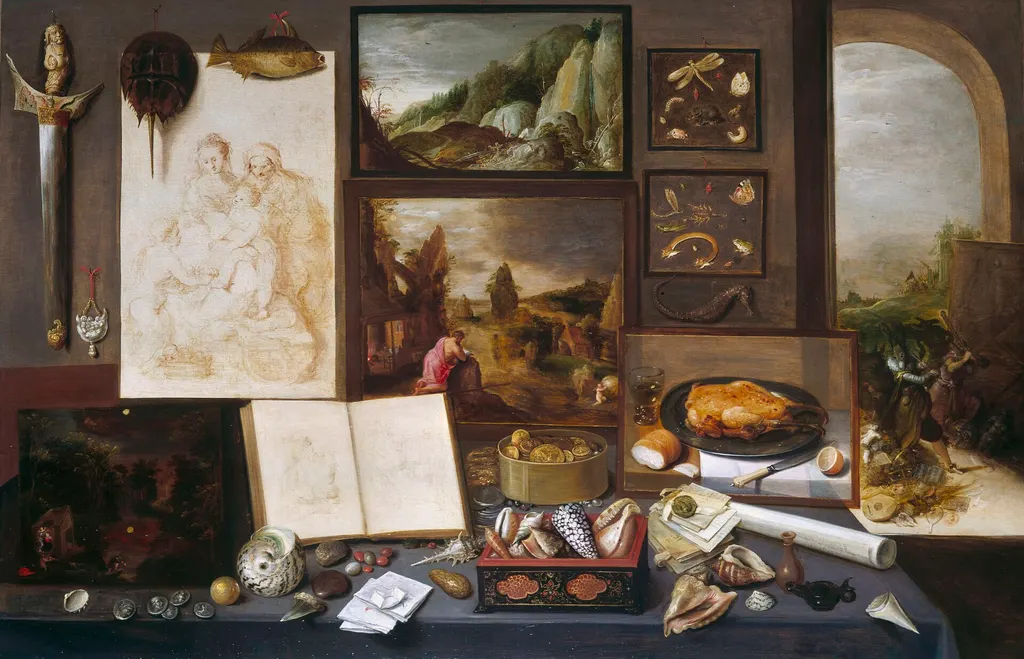
Frans Francken the YoungerThe Cabinet of a Collector, 1617Wikimedia Commons, collection record. Public domain
Imagine a small bronze figure on a dealer's stand: green with age, beautifully modelled, reasonably priced. The label says "ancient, from an old private collection". It is exactly the kind of object that makes collecting exciting, and exactly the kind that should make a careful buyer pause. Which collection? Since when? How did it leave the country where it was made or excavated? Can anyone show you a document?
Collecting responsibly means asking those questions every time, and walking away when the answers are not good enough. It protects you from buying something that could be seized, reclaimed or unsaleable. It also protects archaeological sites, communities and the historical record from the damage done by looting and illicit trade. This guide sets out the main checks, explains several of the laws that collectors most often meet (always noting which jurisdiction a rule belongs to), and ends with a checklist to use before and after a purchase.
Please note: laws change and differ from country to country, and even between regions of the same country. This article is a general guide, not legal advice. For a valuable or sensitive purchase, take advice from a specialist lawyer in the relevant jurisdiction.
Start with provenance
Provenance, the documented history of an object's ownership, is the foundation of responsible collecting. Ask for it in writing: previous owners, dates, exhibition and publication history, old invoices, export licences, photographs. Our article Provenance Explained shows how to read and test such a history.
Gaps are normal; few objects have an unbroken record. But some gaps matter more than others:
- Antiquities and archaeological material with no documented history before 1970. The UNESCO Convention on the Means of Prohibiting and Preventing the Illicit Import, Export and Transfer of Ownership of Cultural Property was adopted in 1970, and many museums use that year as a benchmark when deciding whether to acquire an antiquity.
- Works that changed hands in Europe between 1933 and 1945, when Nazi persecution led to confiscations and forced sales. In 1998 the Washington Conference Principles on Nazi-Confiscated Art set out international principles for identifying such works and reaching "just and fair solutions" with claimants.
- Ethnographic and sacred objects removed from communities during colonial rule, or later without consent.
Vague phrases such as "old European collection" or "by descent" are not provenance unless they are backed by names and documents.
Check it is not stolen
Before buying anything of significant value, search the main databases of stolen art:
- INTERPOL's Stolen Works of Art database can be searched by the public, free, through INTERPOL's ID-Art app, by keyword or by photographing an object. The app can also be used to inventory your own collection using the Object ID standard.
- Commercial registers, such as the Art Loss Register, check objects against their records for a fee and often issue a search certificate.
- National and specialist databases, including the German Lost Art Foundation's database of cultural property lost through Nazi persecution.
Our guide to stolen art registers explains how these differ. Remember the limitation that every register shares: a "no match" result only means the object has not been reported. Looted antiquities taken straight from the ground were never in any inventory, so they will never appear on a list of stolen objects.
Antiquities and cultural property: where you are matters
United Kingdom
In England, Wales and Northern Ireland, the Dealing in Cultural Objects (Offences) Act 2003 makes it a criminal offence to deal dishonestly in a "tainted" cultural object, knowing or believing it to be tainted. An object is tainted if, after the Act came into force at the end of 2003, it was removed from a building or monument or excavated in circumstances that were an offence, whether in the UK or elsewhere. "Dealing" includes buying, selling, importing and exporting. The maximum penalty on indictment is seven years' imprisonment. The Act does not extend to Scotland.
European Union
Regulation (EU) 2019/880 on the introduction and import of cultural goods has applied in full since 28 June 2025. It prohibits bringing into the EU cultural goods that were illegally exported from the country where they were created or discovered. For certain categories it adds paperwork, handled through a central electronic system (ICG):
- an import licence for archaeological objects and elements of dismembered monuments more than 250 years old;
- an importer statement for other listed categories, such as paintings and manuscripts, that are more than 200 years old and worth €18,000 or more.
These rules govern imports into the EU from outside it; they sit alongside each member state's own heritage and export laws.
United States
The Convention on Cultural Property Implementation Act of 1983 implements the UNESCO Convention through bilateral agreements and emergency actions. These impose import restrictions on designated categories of archaeological and ethnological material from specific countries, published in the Federal Register and enforced by US Customs and Border Protection. Whether an object is restricted depends on its type and country of origin, so check the current list of agreements maintained by the State Department.
Wildlife materials: ivory, tortoiseshell, feathers
Many antiques contain materials from protected species: ivory, tortoiseshell, rhinoceros horn, coral, rare woods, feathers. International trade in these is governed by CITES, the Convention on International Trade in Endangered Species, and many countries add their own controls.
In the UK, the Ivory Act 2018 came into force on 6 June 2022. It bans dealing in items containing elephant ivory (and ivory from hippopotamus, killer whale, narwhal and sperm whale) unless the item falls within an exemption and has been registered or certified first. Government guidance lists the exemptions:
| Exemption (UK Ivory Act) | Main conditions | What is required |
|---|---|---|
| Pre-1947 items with low ivory content | Made before 3 March 1947; less than 10% ivory by volume; ivory integral | Registration |
| Portrait miniatures | Made before 1918; surface area no more than 320 cm² | Registration |
| Musical instruments | Made before 1975; less than 20% ivory by volume | Registration |
| Sales to qualifying museums | Buyer is a qualifying museum | Registration |
| Rare and important items | Made before 1918; outstandingly high artistic, cultural or historic value | Exemption certificate after expert assessment |
Owners of portrait miniatures, many of which are painted on ivory, should note that a previously registered item must be registered again before each resale.
In the United States, federal rules and a number of state laws restrict commercial trade in elephant ivory, with narrow exemptions for qualifying antiques, and the requirements differ from state to state. Federal wildlife law also restricts the sale of objects containing parts of many protected birds, such as eagle feathers.
Money-laundering checks
Expect to be asked for identification when you buy expensive art. In the UK, businesses that trade in or act as intermediaries in the sale of works of art have been "art market participants" under the money-laundering regulations since 10 January 2020, supervised by HMRC by default. The threshold was originally transactions of €10,000 or more, including linked payments. The Money Laundering and Terrorist Financing (Amendment) Regulations 2026 replaced that figure with £10,000, with effect from 30 June 2026. A dealer who asks for your passport and proof of address is following the law, not doubting you. EU member states apply comparable rules to art traders under EU anti-money-laundering legislation.
Ethics beyond the law
Legal is not always the same as right. Responsible collectors also consider:
- Sacred and ceremonial objects. Some objects were never meant to be sold, and their communities may still consider them alive or restricted. In the United States, the Native American Graves Protection and Repatriation Act governs federal agencies and museums receiving federal funds, but the ethical questions it addresses reach private collectors too. Our article on African weapons as art and culture discusses how to approach such objects with respect.
- Restitution. Museums and governments are returning objects to their countries and communities of origin. Collectors should expect the same questions about objects in their own hands; see Protecting Cultural Heritage.
- Living artists. Buying directly from artists or from galleries that represent them fairly keeps money in the creative economy. Ask about editions, certificates and reproduction rights.
Before and after you buy
A checklist before you buy
- Ask for the provenance in writing, with names, dates and documents.
- Check the object against stolen-art databases and keep a record of the search.
- For antiquities, ask for evidence that the object was out of its country of origin before 1970, or legally exported since.
- Identify any wildlife materials and check the rules where you live and where you may later sell.
- Get a written invoice that describes the object, its date, any attribution and any restoration.
- Ask for a condition report and photographs.
- Research comparable prices so you recognise a price that is too good to be true; auction records and published price guides are the usual starting points.
- If anything feels evasive, walk away.
After you buy
Keep every document together: invoice, provenance, search certificates, licences and registrations. Photograph the object from all sides and record its dimensions, materials, inscriptions and marks, following the Object ID standard. That record helps with insurance, with any future sale and, if the worst happens, with recovery after theft. More guidance for collectors is gathered under antiques and collectibles.
Sources
- Dealing in Cultural Objects (Offences) Act 2003, legislation.gov.uk
- EU introduces new import controls of cultural goods, European Commission, Access2Markets
- Dealing in items containing ivory or made of ivory, GOV.UK
- Money laundering supervision for art market participants, HM Revenue & Customs
- The Money Laundering and Terrorist Financing (Amendment) Regulations 2026, legislation.gov.uk
- ID-Art mobile app, INTERPOL