Identifying Ceramic Styles: Earthenware, Stoneware and Porcelain
How to tell earthenware, stoneware and porcelain apart by examining the foot, chip, glaze and translucency, with a clear guide to tin glaze and bone china.
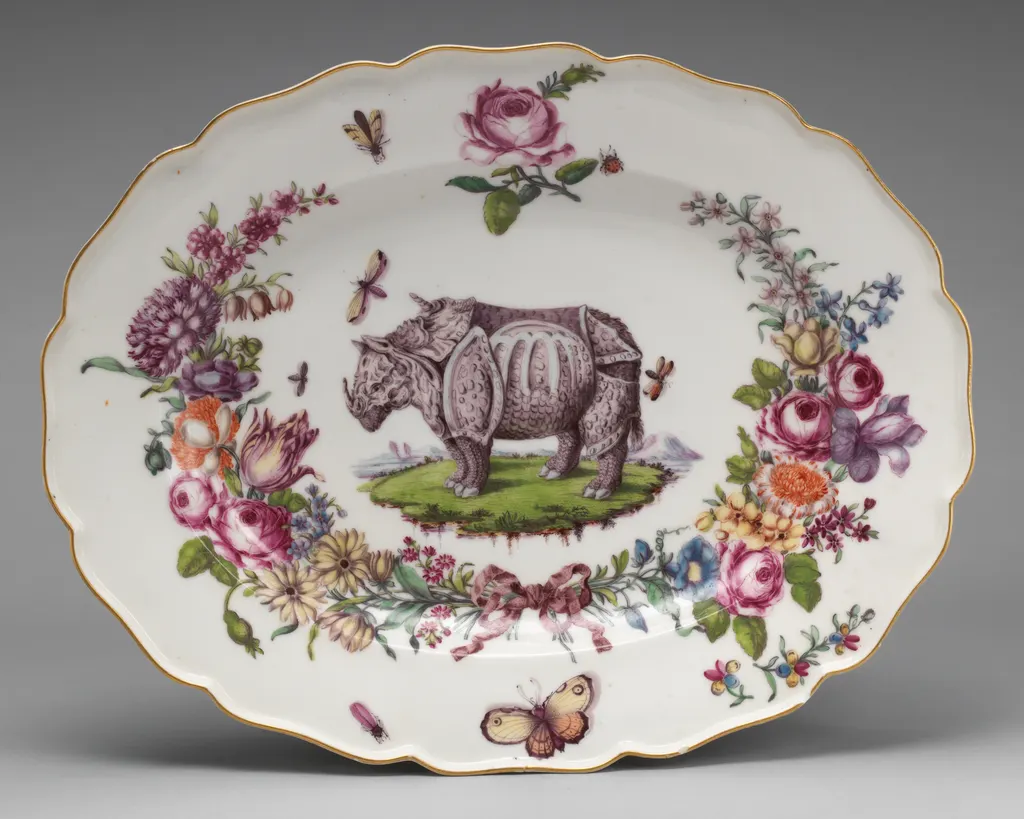
Chelsea Porcelain ManufactoryDish, ca. 1752–56Soft-paste porcelainThe Metropolitan Museum of Art, collection record. CC0 1.0 (Public Domain)
Pick up a small bowl at a country sale and turn it over. Around the base is a ring where the glaze stops and the bare clay shows. On one bowl that ring is the rusty orange of a flowerpot; on another it is grey and hard, with a faint orange blush where the kiln flame licked it; on a third it is white, smooth and so dense it feels almost like glass. Those three rings tell you most of what you need to know. The first bowl is earthenware, the second stoneware, the third porcelain.
Every pot ever made is clay transformed by fire, but the kind of clay and the heat of the kiln produce three very different families of material. Learning to recognise them is the first step in reading any ceramic object, whether it is a Roman lamp, a Rhineland beer jug or an eighteenth-century teacup. This guide explains what separates the three bodies, how the historic sub-types fit in (maiolica, delftware, creamware, soft-paste, bone china), and how to examine a piece methodically with nothing more than your eyes, a lamp and a fingernail.
Clay and heat: why the three families differ
The essential difference is vitrification: the point at which the particles of a clay body begin to fuse into glass. A body that has not vitrified stays porous, like a sponge. A body that has fully vitrified is dense and impervious to water even without a glaze.
- Earthenware is fired at relatively low temperatures, generally below about 1,200°C and often well below. It remains porous and needs a glaze to hold liquid reliably.
- Stoneware is fired hotter, roughly in the range of 1,200–1,300°C depending on the clay. It vitrifies, so it is hard, heavy and watertight even when unglazed.
- Porcelain is made from a refined white body and fired at high temperatures. The Victoria and Albert Museum gives a range of 1,200°C to 1,450°C for hard-paste or "true" porcelain, which it describes as white, translucent, resonant and non-porous.
These ranges overlap, and firing temperature alone does not define a category. Composition matters just as much. Porcelain's whiteness and translucency come from its ingredients, chiefly the white clay kaolin combined with a feldspathic rock, as much as from the heat.
Earthenware: porous, warm and endlessly decorated
Earthenware is the oldest and most widespread ceramic. Unglazed, low-fired earthenware is usually called terracotta (Italian for "baked earth"), the material of everything from garden pots to the ancient figures discussed in our article on Nok terracottas.
Because the body is soft and porous, potters developed many ways to seal and decorate it:
Lead-glazed and slip-decorated wares
A transparent lead glaze gives earthenware its warm honey or green tones. Slip, clay thinned with water to a creamy liquid, can be trailed, combed, marbled or scratched through (sgraffito). The V&A notes that the word "slipware" has been applied to slip-decorated pottery specifically since around 1900.
Tin-glazed earthenware
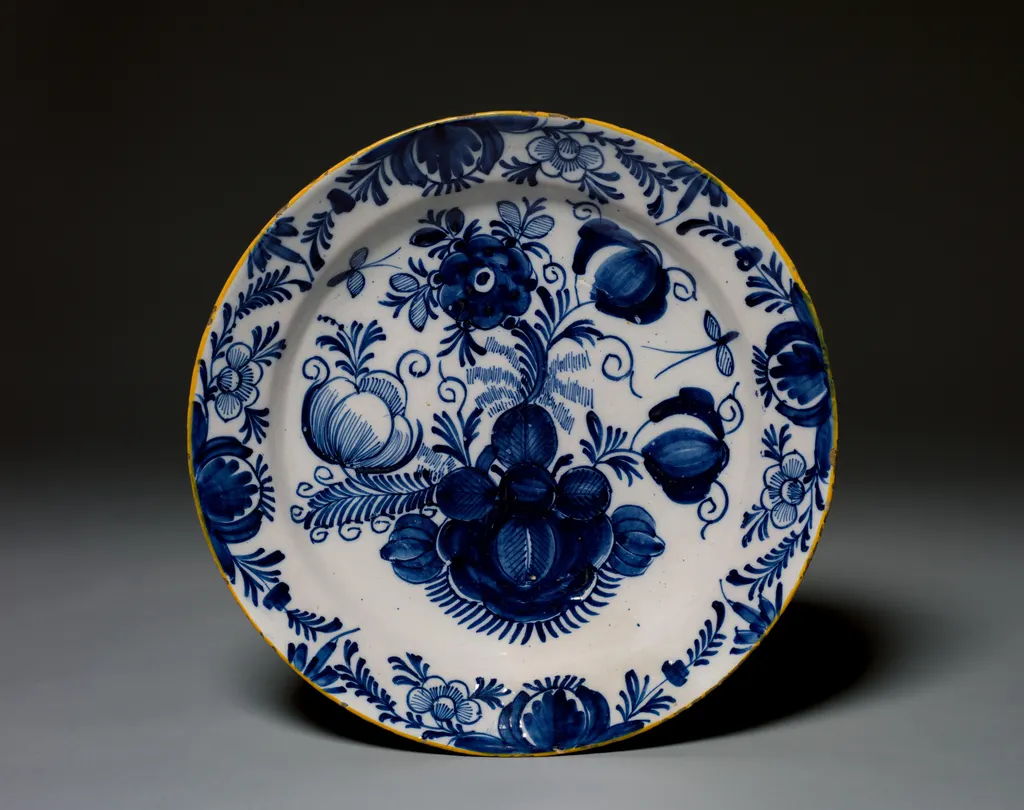
Adding tin oxide to a lead glaze makes it opaque and white, a perfect ground for painting. This family goes by different names depending on where it was made. In Italy it is maiolica; in France, faience; in the Netherlands and the British Isles, delftware. Our article on Isabella d'Este and a maiolica masterpiece shows the Italian tradition at its most ambitious, and Delftware: The Story of Dutch Blue and White follows it north. On tin-glazed pieces, look at the rims and edges: the soft body chips easily, and the white glaze flakes away to reveal buff or pinkish clay beneath.
Creamware and later refined earthenwares
In eighteenth-century Staffordshire, potters made a pale, thin, lead-glazed earthenware from whitish clays and calcined flint. The V&A dates creamware from the 1740s and notes that Josiah Wedgwood improved it in the 1760s, calling his version "Queen's Ware" after his appointment as Potter to Queen Charlotte in 1766. Creamware and its successors took much of the everyday market from tin-glazed wares.
Stoneware: fired to the point of stone
Stoneware is dense, strong and often grey, buff or brown. Its glazes can be startlingly varied, from the ash glazes of East Asia to the glossy salt glazes of Germany.
Salt glaze is produced by throwing common salt into the hot kiln; the vapour reacts with the clay surface to form a thin, glassy coat, frequently with a pitted texture like orange peel. In the sixteenth and seventeenth centuries, the potteries of the Rhineland and neighbouring regions (Cologne, Frechen, Siegburg and Raeren among them) produced vast quantities of salt-glazed jugs and bottles. The best known are the Bartmann ("bearded man") jugs with a moulded mask on the neck, exported across Europe and found in excavations far beyond it.
Stoneware is not always rustic. Wedgwood's jasper, with its white classical reliefs on a coloured ground, is an unglazed stoneware; so is much of the red stoneware made in China at Yixing for tea.
Porcelain: hard-paste, soft-paste and bone china
Chinese potters had perfected high-fired white porcelain centuries before Europeans could make it, and imported Chinese wares set off a long European hunt for the secret. That hunt produced three distinct materials, which collectors still distinguish carefully.
Hard-paste ("true") porcelain
Made from kaolin and feldspathic rock and fired very hot, hard-paste porcelain has a cold, glassy whiteness and a glaze that fuses tightly with the body. In Europe it was first achieved in Saxony. The Met's Heilbrunn Timeline dates the breakthrough to 1709, when Johann Friedrich Böttger found the materials for a white, translucent, high-fired body, and records that Augustus the Strong established the factory at Meissen, outside Dresden, in 1710.
Soft-paste porcelain
Before that, potters imitated porcelain with mixtures of clay and ground glass or other fluxes, fired at lower temperatures. The first European attempt was Medici porcelain, made in Florence between about 1575 and 1587 under Francesco I de' Medici. Only around sixty pieces are thought to survive, among them a ewer at the Met. Eighteenth-century soft-paste was made at French factories such as Vincennes and Sèvres and at English ones such as Chelsea and Bow. Soft-paste glazes tend to look warm and slightly "wet", and they can sometimes be scratched where hard-paste cannot.
Bone china
Bone china adds bone ash to the porcelain body. According to the V&A, bone ash was first used at the Bow factory in the 1740s, and Josiah Spode favoured it in a hard-paste mixture in the 1790s. It became the classic English porcelain body and is still what "china" means in industrial use.
A quick comparison
| Earthenware | Stoneware | Porcelain | |
|---|---|---|---|
| Typical firing | Low (generally below ~1,200°C) | High (~1,200–1,300°C) | High (hard-paste up to ~1,450°C) |
| Porosity | Porous unless glazed | Vitrified, watertight | Vitrified, watertight |
| Unglazed foot | Soft, often red, buff or pink; may stain | Hard, grey, buff or brown; may show a flame blush | White, smooth, dense |
| Translucency | None | None | Usually, where thin |
| Sound when tapped | Dull thud | Clear but lower ring | Higher, longer ring |
| Chip | Rough, earthy; glaze flakes | Stony, close-grained | Glassy, shell-like (hard-paste); more granular (soft-paste) |
| Historic examples | Maiolica, faience, delftware, slipware, creamware | Rhenish salt-glazed jugs, Yixing teapots, jasper | Chinese export wares, Meissen, Sèvres, bone china |
How to examine a piece, step by step
- Start with the foot. Look at any bare, unglazed area: the foot ring, the base or a chip. Colour, texture and hardness of the exposed body are your best single clue.
- Check for translucency. Hold the piece in front of a lamp or a phone torch, with your hand behind a thin part such as the rim. If you can see the shadow of your fingers, it is almost certainly porcelain. Thickly potted porcelain may not pass light, so a negative result is not conclusive.
- Study the glaze. Is it opaque white over a coloured body (tin glaze)? Transparent and pooling in recesses (lead glaze)? Pitted like orange peel (salt glaze)? Does it sit on the surface or seem fused into the body?
- Look for crazing. A network of fine cracks in the glaze is common on earthenware, where body and glaze shrink at different rates. Dirt in the crazing can discolour a porous body.
- Feel the weight. Stoneware is typically heavy for its size; porcelain feels dense but can be very thin; earthenware feels lighter and "warmer".
- Listen. A gentle flick with a fingernail on the rim of a sound vessel gives a ring rather than a thud. A crack deadens the sound in any material, so use this only as a comparison.
- Treat marks with caution. Factory marks are helpful but were widely copied, and many pieces were never marked at all. Body, glaze, form and decoration should agree with the mark.
Look closer: On a tin-glazed dish, find the place where the rim has rubbed. The white glaze will have worn away to reveal a pale or pinkish body underneath, often with tiny pinholes or "kiln grit" stuck to the base where it rested during firing. On a porcelain dish, worn areas show the same white material as the surface, because body and glaze are both white.
Where to train your eye
The fastest way to learn is to handle and compare. Many museums display ceramics in study galleries where earthenware, stoneware and porcelain sit side by side: the V&A's ceramics galleries in London and the Met's European decorative arts galleries in New York are two of the largest. Museum websites also publish detailed object records, often with photographs of bases and marks. Our guide to open-access museum collections explains how to search them.
For more on clay as a sculptural medium rather than a vessel, see An Introduction to Sculpture, and browse the full range of articles under sculpture and ceramics. Once you can tell the three bodies apart, every ceramic object you meet starts to explain itself: where it might have been made, what it was for, and how much skill the fire demanded.
Sources
- A–Z of ceramics, Victoria and Albert Museum
- German and Austrian Porcelain in the Eighteenth Century, The Metropolitan Museum of Art, Heilbrunn Timeline of Art History
- Medici porcelain, Encyclopaedia Britannica
- Ewer (Brocca), Medici porcelain, The Metropolitan Museum of Art