An Introduction to Sculpture: Carving, Modelling, Casting
How sculpture is made: carving stone and wood, modelling clay and wax, and lost-wax bronze casting, with famous examples and tips for looking closely.
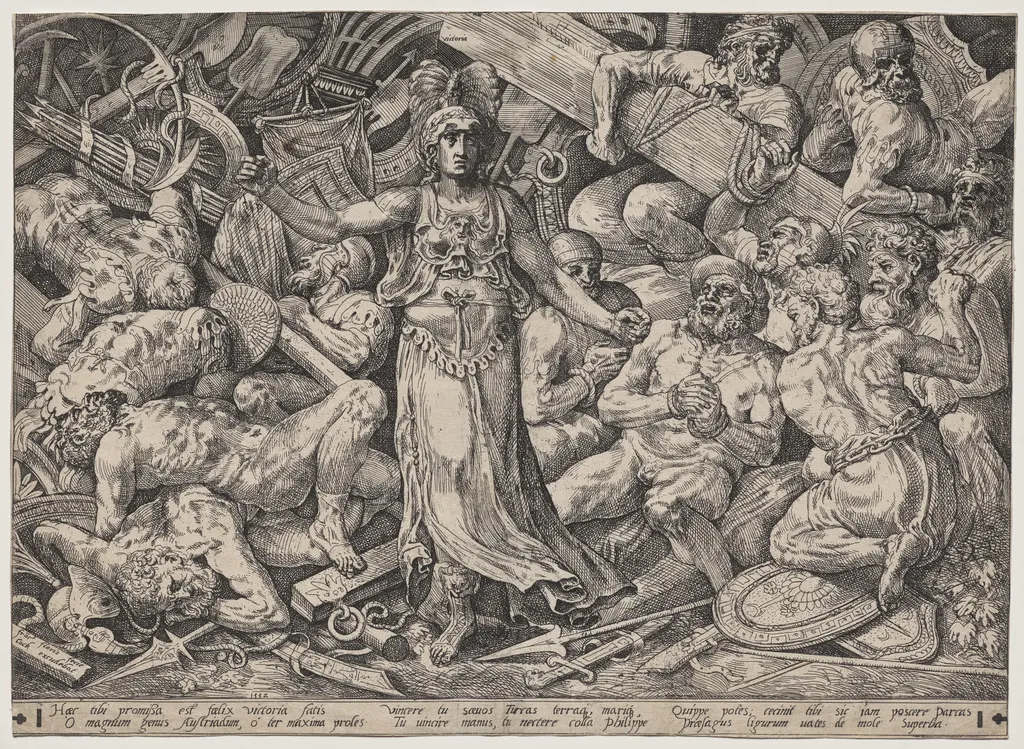
Frans Floris the ElderVictory Surrounded by Prisoners and Trophies, 1552etching with engravingCleveland Museum of Art, collection record. CC0 1.0 (Public Domain)
In the Galleria dell'Accademia in Florence, on the way to Michelangelo's David, visitors walk past four unfinished marble figures known as the Prisoners or Slaves. A shoulder twists out of rough stone; a head is only half-released from the block; the grooves of the sculptor's chisels score the surface like combed sand. They show, more vividly than any finished statue, what carving is: a figure found by taking material away.
Sculpture is three-dimensional art, but it is above all an art of materials and processes. A marble saint, a clay head, a bronze horse and a wooden mask may represent similar things, yet each was made in a fundamentally different way, and the process shapes how it looks, what it can do and how long it lasts.
This guide introduces the three classic methods (carving, modelling and casting), adds the modern method of construction, and suggests how to look at sculpture with an eye for how it was made.
Three ways of making, and a fourth
Sculptors traditionally distinguish between subtractive and additive processes, with casting as a means of translating one material into another.
| Method | Process | Typical materials | What to look for |
|---|---|---|---|
| Carving | Subtractive: material removed from a block | Stone, wood, ivory, jade, bone | Tool marks, compact forms, limbs kept close to the body or supported |
| Modelling | Additive: soft material built up | Clay, wax, plaster, papier-mâché | Fingerprints, tool impressions, fluid surfaces |
| Casting | Replicative: a mould taken from a model and filled with liquid material | Bronze and other metals, plaster, resin, concrete | Seams, chasing, patina, foundry marks, editions |
| Construction / assemblage | Parts joined together | Sheet metal, wood, found objects, wire | Joints, welds, mixed materials |
Carving: finding the figure in the block
Carving is the most unforgiving method: what is removed cannot be put back. The sculptor must imagine the finished form inside the block and approach it gradually.
Stone
Marble, limestone, sandstone and alabaster have been carved for millennia. The traditional sequence of tools tells the story of a carving:
- Pitching tool and point. Heavy blows remove large masses and rough out the form, leaving pitted surfaces.
- Claw chisel. A toothed chisel refines the shape, leaving networks of parallel scratches, clearly visible on Michelangelo's unfinished figures.
- Flat chisels and gouges. These define planes and details.
- Rasps, files and abrasives. These smooth the surface; marble was traditionally polished with stones such as pumice and with fine abrasives.
Michelangelo's David (1501–04) is the classic example of carving as both skill and problem-solving. The block, about five metres tall in the finished statue, had been quarried at Carrara decades earlier for another sculptor, Agostino di Duccio, who abandoned it; it was considered flawed and lay unused until Michelangelo took on the commission. He had to design a figure that fitted a narrow, already partly worked block.
From the nineteenth century, many sculptors modelled their work in clay, had it cast in plaster, and employed skilled carvers to transfer it into marble using a pointing machine, a device that measures the depth of many points on the plaster and reproduces them in the stone. A signature on a marble does not always mean the artist held the chisel.
Wood
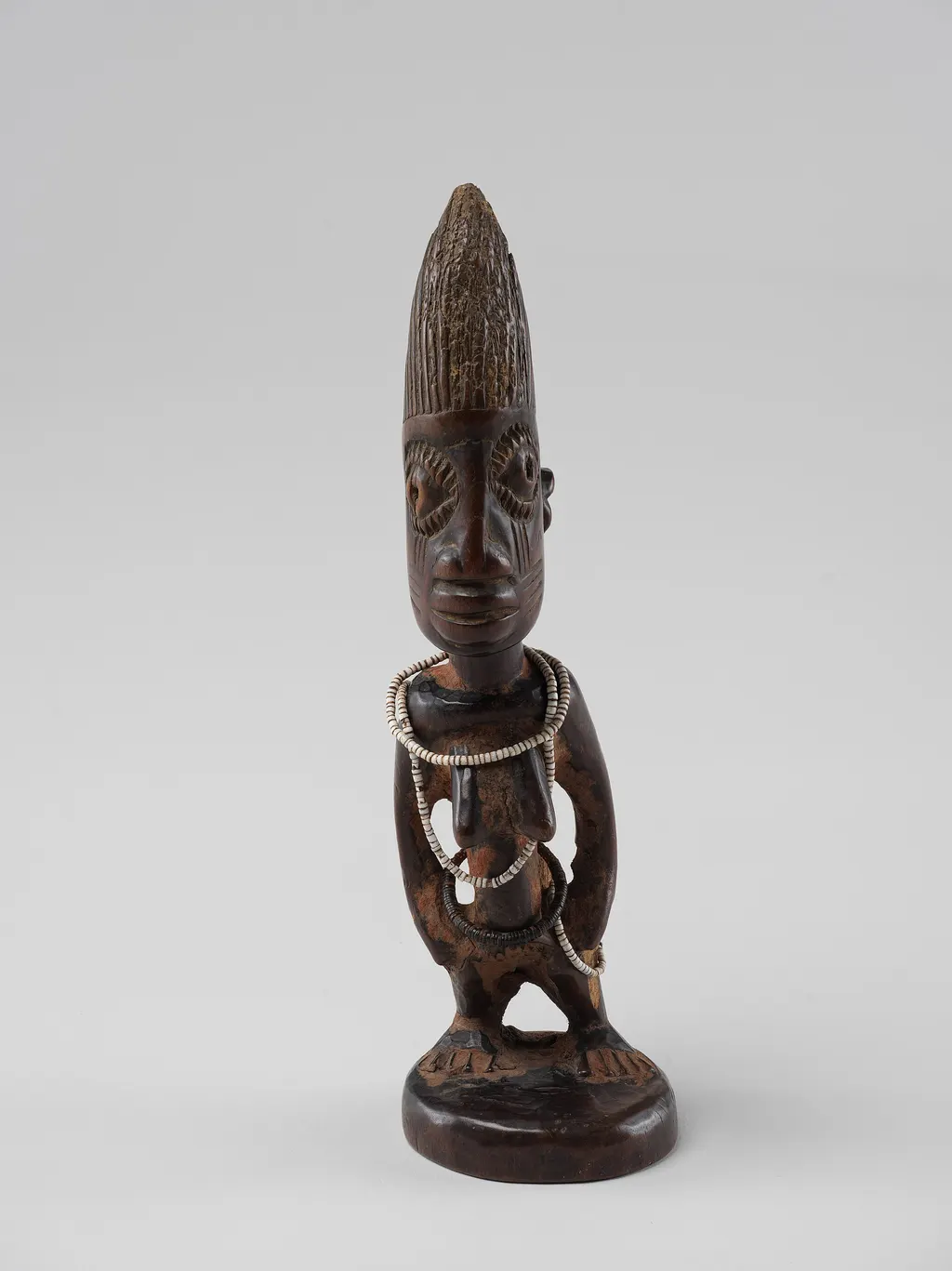
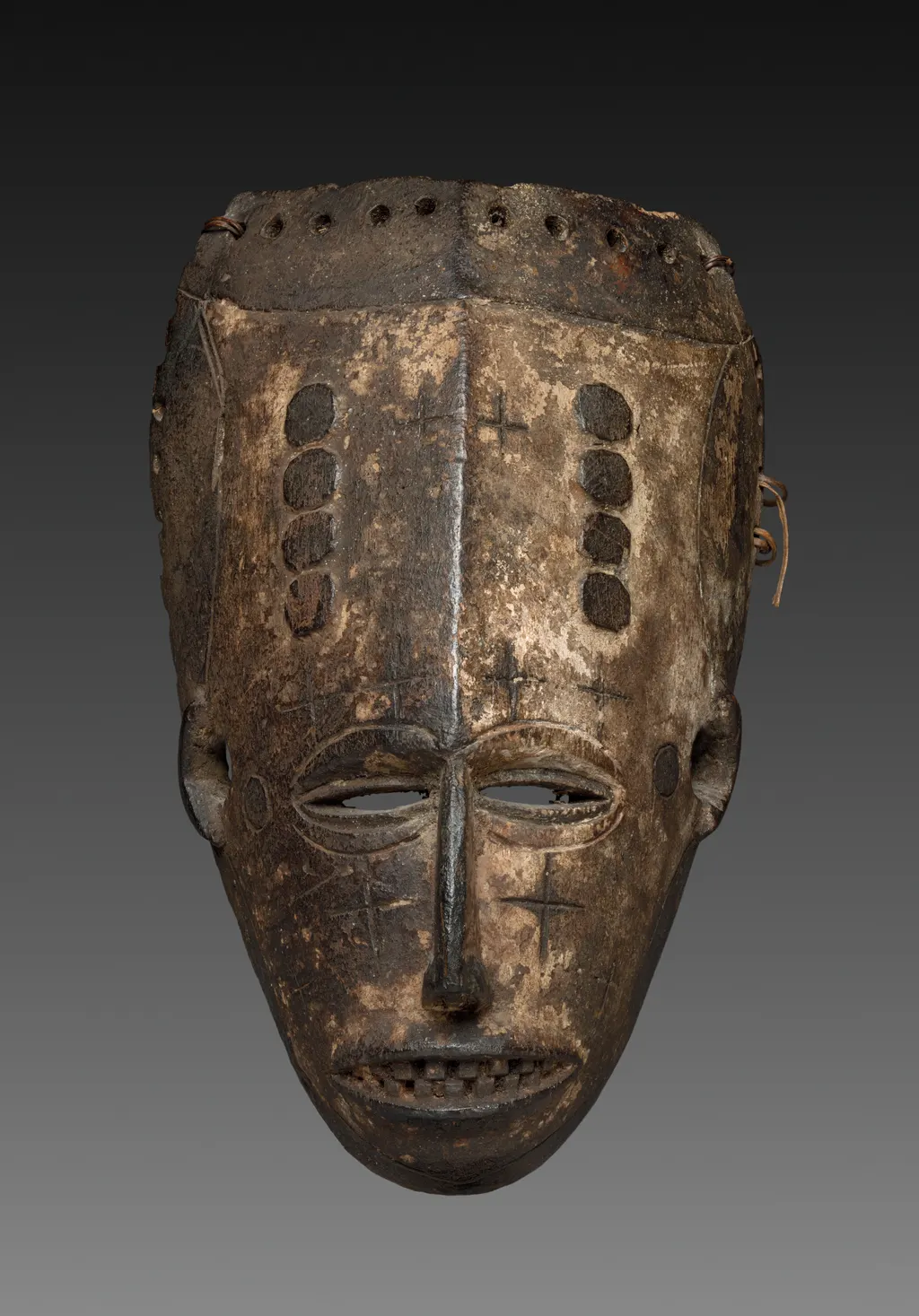
Wood is lighter and warmer than stone and can be carved with knives, adzes, chisels and gouges. Its grain affects every cut, and it can crack as it dries, so carvers often work with seasoned wood or hollow out the back. Wood carving is central to many of the world's sculptural traditions. Yoruba ere ibeji, carved figures commemorating twins, are typically carved from a single piece of wood and acquire a soft, worn surface from generations of handling, washing and anointing (see Ere ibeji: Yoruba twin figures). Igbo maiden spirit masks combine carving with painted surfaces and are made to be seen in performance, not on a plinth, as discussed in Igbo maiden spirit masks.
Modelling: building up form
Modelling is additive and flexible: the sculptor can add, remove and change. Clay is the classic medium, but wax and plaster are also modelled.
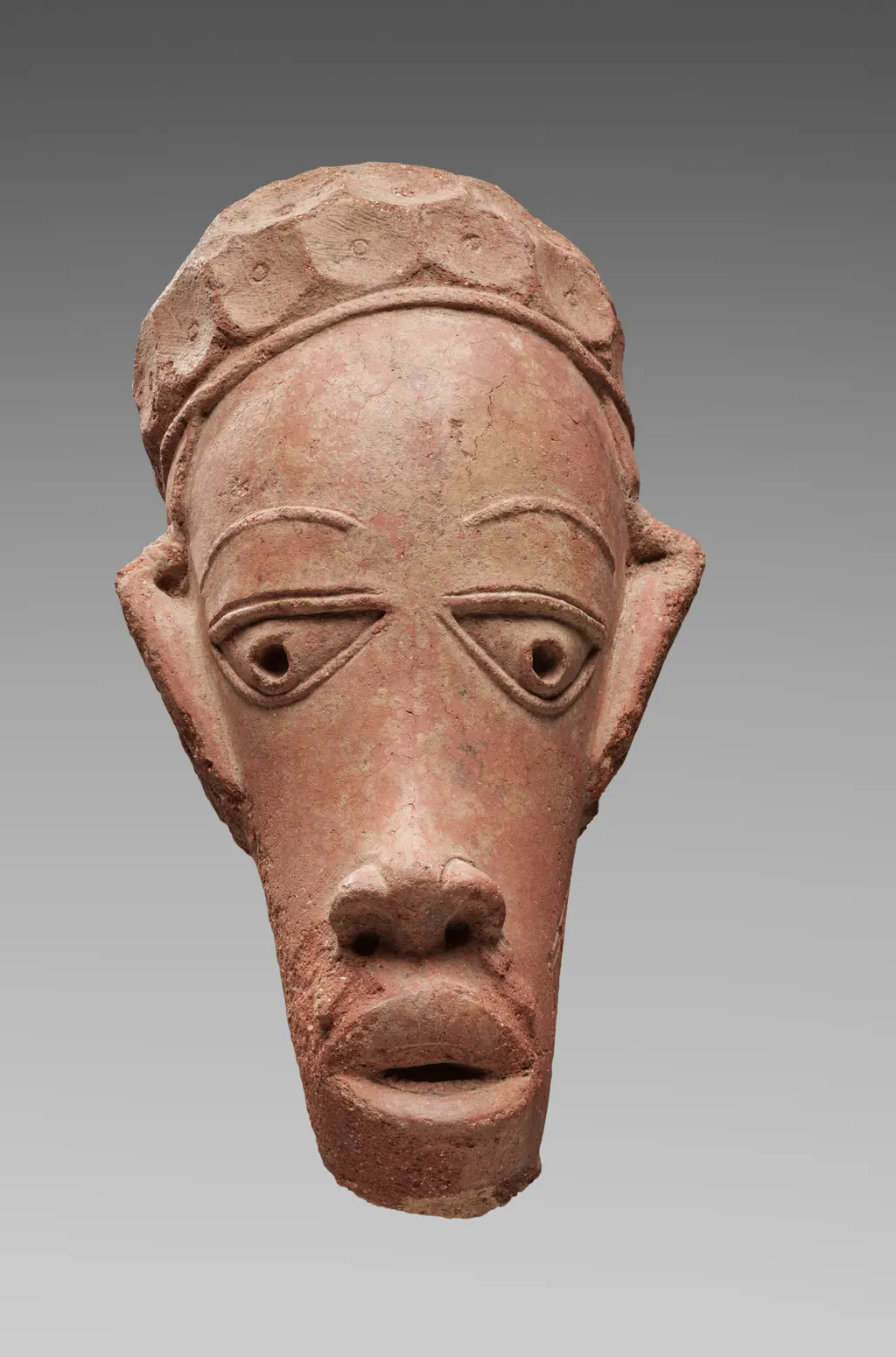
- Clay is pushed, pinched, smoothed and cut, often over an armature (an internal support of wire, wood or metal) for larger pieces. Clay can be fired to become terracotta ("baked earth"), which is durable but brittle. Larger terracottas must be hollow, or carefully built, to fire without cracking. Some of the oldest surviving sculpture in sub-Saharan Africa is in fired clay: the Nok terracottas of present-day Nigeria, introduced in Nok terracottas and the origins of African sculpture. For the materials science of fired clay, see identifying ceramic styles.
- Wax is ideal for fine detail and is the starting point of lost-wax casting.
- Plaster can be modelled while setting, carved once hard, or cast. Many museum "originals" by nineteenth-century sculptors are in fact plaster models, made for exhibition or as the master for bronzes and marbles.
Look closer: On terracottas and sculptors' clay or wax sketches (often called bozzetti or maquettes), look for fingerprints, the marks of modelling tools and pellets of added clay. These small sketches are often closer to the sculptor's first idea than the finished marble or bronze.
Casting: from model to metal
Casting allows a fragile model to be translated into a permanent material, and it allows multiples. The most important method for art bronzes, used across many cultures and throughout the European Renaissance, is the lost-wax process (cire perdue).
The lost-wax process, step by step
- Model. The sculptor makes a model in clay, wax or plaster.
- Mould. A mould is taken from the model, traditionally in plaster, today often in silicone rubber inside a rigid case.
- Wax positive. Molten wax is brushed or poured into the mould to make a hollow wax replica of even thickness. The sculptor can refine details at this stage.
- Core and channels. The wax is filled with a heat-resistant core. A system of wax rods (sprues and vents) is attached so that metal can flow in and gases escape.
- Investment. The whole assembly is encased in a heat-resistant mould material.
- Burnout. The mould is heated; the wax melts and runs out (it is "lost"), leaving a cavity in the exact shape of the sculpture.
- Pour. Molten bronze, an alloy based on copper with tin, is poured into the cavity.
- Break-out and finishing. When cool, the mould is broken away, channels are cut off, the surface is chased (refined with tools), and a patina is developed with chemicals and heat to give colour.
Casting was risky. Benvenuto Cellini, commissioned in 1545 by Duke Cosimo I de' Medici to make Perseus with the Head of Medusa, described in his autobiography a near-catastrophic pour in which the metal began to fail; the statue was eventually unveiled in Florence's Loggia dei Lanzi in 1554, where it still stands.
Bronze casting is also central to many traditions beyond Europe. The celebrated plaques and heads of the Kingdom of Benin, in present-day Nigeria, were cast in brass and bronze by guilds of royal casters using lost-wax techniques. Thousands of these works were taken by British forces in 1897, and their return is the subject of continuing restitution discussions.
Editions and "originals"
Because a mould can be reused, sculptures can exist in several authorised casts. Auguste Rodin's The Thinker began around 1880 as a figure about 70 cm high for the top of his monumental doorway The Gates of Hell, representing the poet Dante. It was exhibited separately in 1888 and enlarged in 1904; the Musée Rodin's colossal cast was made by the Alexis Rudier foundry that year. Many casts of the figure exist in museums around the world. When looking at a bronze, check the label for the cast date and the foundry: a cast made long after the sculptor's death is a different object, historically, from one supervised by the artist.
Relief and sculpture in the round
Sculpture can also be classified by how it relates to space.
- In the round: free-standing, meant to be seen from several or all sides.
- Relief: projecting from a background. In low relief (bas-relief) forms barely rise from the surface, like the image on a coin; in high relief they project strongly, sometimes almost free of the background. Lorenzo Ghiberti's gilded bronze doors for the Florence Baptistery, known as the Gates of Paradise, combine both, using perspective to create deep space in shallow metal.
Construction: the twentieth-century addition
In the early twentieth century, artists began building sculpture rather than carving or modelling it. Pablo Picasso's constructed Guitar (1912–14), made first in cardboard and later in sheet metal, assembled flat planes into an open form. Later sculptors welded steel, assembled found objects and used industrial materials, extending sculpture far beyond its traditional processes.
How to look at a sculpture
- Walk around it. Free-standing sculpture is designed to change as you move. Is there a main viewpoint, or does it reward every angle?
- Notice the light. Daylight, spotlights and shadows transform carved and cast surfaces.
- Ask where it was meant to be. A church niche, a public square, a shrine, a dance performance or a private cabinet each imply a different viewer.
- Identify the process. Use the table above. Can you see chisel marks, fingerprints, casting seams or welds?
- Check the base and label. Look for signatures, foundry marks, cast numbers and dates.
- Consider scale. How does the sculpture's size relate to your own body?
For more on three-dimensional art in clay, stone and metal, explore our sculpture and ceramics topic page.
Sources
- How a Rejected Block of Marble Became the World's Most Famous Statue, Encyclopaedia Britannica
- The Thinker, Musée Rodin
- Bronze Sculpture in the Renaissance, The Metropolitan Museum of Art