Nok Terracottas and the Origins of African Sculpture
The fired-clay heads and figures of the Nok culture of central Nigeria, how archaeology has redated them, and why looting threatens what we can learn.
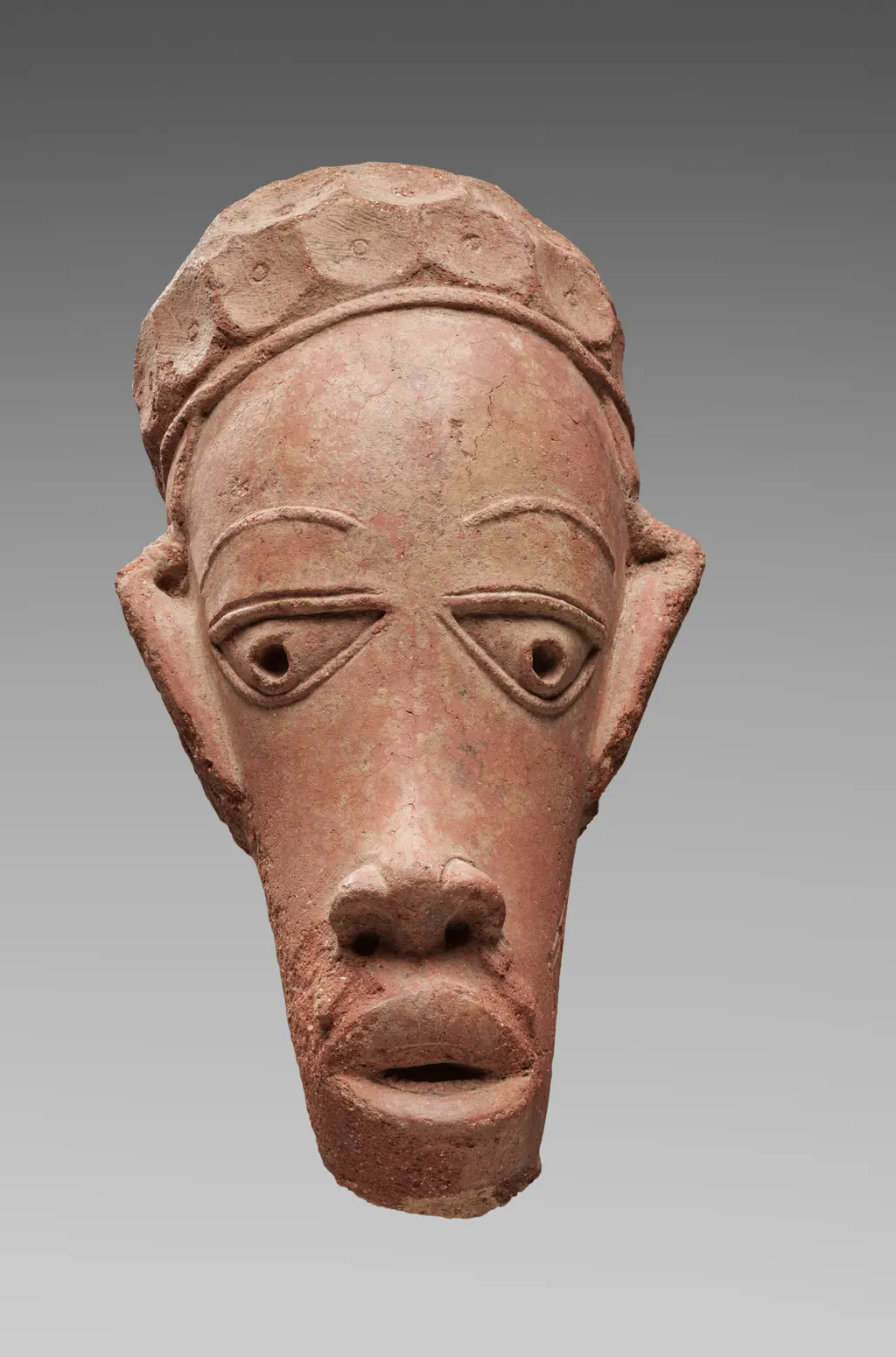
Africa, West Africa, Nigeria, Nok-culture style region, unknown female ceramicistHead, thermoluminescence date 20–620 CEterracottaCleveland Museum of Art, collection record. CC0 1.0 (Public Domain)
In 1943 a fired-clay head turned up in the spoil of a tin mine in central Nigeria. A mine clerk took it home and, the story goes, set it on a stake in his yam field as a scarecrow, where it stood for a year. When the archaeologist Bernard Fagg, then a colonial administrative officer, saw it, he recognised that it resembled a terracotta found by miners near the village of Nok in 1928. Together they were the first clues to one of the most remarkable sculptural traditions of the ancient world.
The Nok culture produced the earliest large-scale figurative sculpture known from sub-Saharan Africa. This article looks at what the terracottas are, how a long-running German–Nigerian research project has transformed their dating, what we can and cannot say about their meaning, and why looting has become the central problem in their study.
Discovery on the Jos Plateau
The Nok culture takes its name from the village of Nok in present-day Kaduna State, on the southern and western edges of the Jos Plateau. In the first half of the twentieth century this was tin-mining country, and open-cast mining churned through ancient alluvial deposits, bringing terracotta fragments to the surface and destroying their context in the process.
Fagg, who had studied archaeology at Cambridge, began to collect and record finds and later carried out excavations, including at the site of Taruga, where evidence of iron smelting was found alongside terracottas. From these beginnings Nok came to be recognised as an archaeological culture in its own right.
A new chronology
For decades Nok was often dated to around 500 BCE to 200 CE, on the basis of limited excavated evidence, and some older sources extended it later still. That picture changed with a long-term project led by archaeologists of Goethe University Frankfurt, working with Nigerian partners including the National Commission for Museums and Monuments. Systematic fieldwork began in 2005 and continued until 2021, investigating hundreds of sites.
Analysis of pottery, radiocarbon dates and excavated contexts now suggests a much longer sequence:
- Early Nok, c. 1500–900 BCE: the first farming settlements, with characteristic finely incised pottery.
- Middle Nok, c. 900–300 BCE: the flourishing of the culture. Sites, terracotta fragments and iron objects increase dramatically; the sculptures appear to belong mainly to this phase and the following centuries.
- Late Nok, c. 300 BCE to the turn of the era: fewer known sites, before the culture fades from the archaeological record.
The research also suggests that iron smelting began in the Nok region in the first millennium BCE, making it one of the early centres of iron production in West Africa. Older publications and museum labels may still give the earlier date range, so it is worth checking when a text was written.
What the sculptures look like
Nok terracottas range from small figures to heads and bodies approaching life size. They were built up hollow from coils of clay, with openings that helped them dry and fire evenly, and their surfaces were often covered with a slip and burnished to a soft sheen.
Certain features make them recognisable:
- The eyes, typically large, set under arched brows and shaped as triangles or segments of a circle, with deeply pierced pupils.
- Elaborate hairstyles, built up in buns, crests and rows of locks, often with great precision.
- Abundant jewellery, with strings of beads on the neck, arms and ankles.
- Stylisation, in which heads are large in proportion to bodies and features are simplified into strong geometric forms. Some scholars have suggested that the sharp, planar modelling reflects a tradition of wood carving, now lost.
Look closer: Find the holes in a Nok head: the pupils, the nostrils, the ears, sometimes the mouth. Then look at the hairstyle from the side and the back. Sculptors lavished as much care on the coiffure as on the face, a clue to how much hair and ornament mattered in the society that made them.
Meaning and purpose
What the figures were for remains uncertain. Suggestions include representations of ancestors, grave markers, and objects used in ritual or as protective charms. The Frankfurt researchers found terracottas in a variety of contexts, sometimes deliberately deposited, sometimes broken and scattered, and it is likely that they served different purposes at different times.
Equally intriguing is what the excavations have not found. Nok communities appear to have been small, scattered farming settlements growing pearl millet and cowpea, without large towns or obvious palaces. Producing sophisticated sculpture did not, it seems, require a centralised state.
Links with later art are debated. Some scholars have pointed to possible connections with the sculptural traditions of Ife and Benin, which flourished many centuries later, but there is no straightforward line of descent, and the long gap in time makes such connections hard to demonstrate.
The Frankfurt exhibition
From 30 October 2013 to 23 March 2014 the Liebieghaus Skulpturensammlung in Frankfurt presented Nok. Origin of African Sculpture, prepared jointly with Goethe University. It brought together more than a hundred sculptures and fragments excavated by the university's archaeologists between 2005 and 2013 at over 200 sites in central Nigeria, shown alongside Egyptian and Greco-Roman sculpture from the museum's own collection. The project partners included Nigeria's National Commission for Museums and Monuments and the University of Jos. For many visitors it was the first chance to see Nok terracottas presented with their archaeological context rather than as isolated art-market objects.
Looting and the market
The greatest threat to understanding Nok is looting. Since the 1970s, as international demand for the terracottas grew, illegal digging has devastated sites across the Nok region. The Frankfurt team reported that the large majority of known sites in their research area had been looted, and that very large numbers of sculptures have left Nigeria illegally.
Every looted sculpture represents a double loss. The object leaves its country of origin, and the information about where and how it was buried, which might explain its purpose and date, is destroyed for ever. Looters have also been known to assemble pieces from different figures and to produce convincing fakes, so that some terracottas on the market are composites or entirely modern.
Nigerian law has required a permit from the National Commission for Museums and Monuments for the export of antiquities since the 1970s, and Nok terracottas appear on the International Council of Museums' Red List for African archaeological objects, which alerts customs officers, dealers and museums to categories at high risk of illicit trafficking. Several looted pieces have been seized abroad and returned to Nigeria.
If you are ever offered a Nok terracotta, the safest assumption is that it is either illegally exported or not genuine, unless it has documented provenance and proof of legal export. Our articles on Protecting Cultural Heritage and Collecting Art Responsibly explain why.
Where to see Nok sculpture
- National Museum, Lagos, and the National Museum, Jos, in Nigeria, hold important Nok material, much of it recovered by Bernard Fagg and his successors.
- Major museums in Europe and North America display individual Nok heads and figures; check each object's label for provenance information.
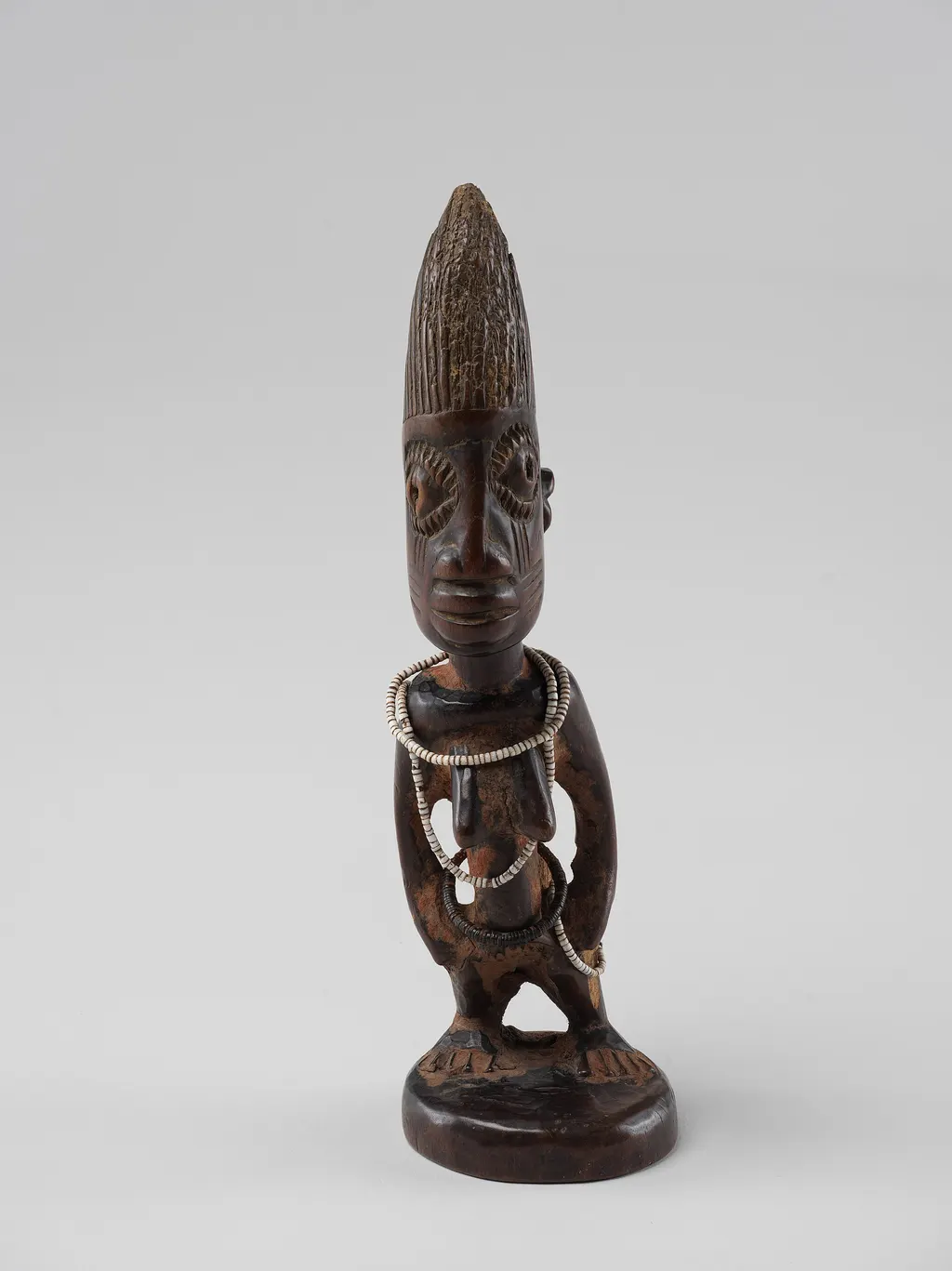
- Further reading: For the wider picture, see An Introduction to Sculpture: Carving, Modelling, Casting and Identifying Ceramic Styles, and compare the much later Yoruba tradition in Ere Ibeji: Yoruba Twin Figures.
More features on clay and carving are on our sculpture and ceramics topic page.
Sources
- Nok. Origin of African Sculpture, Liebieghaus Skulpturensammlung
- Nok culture, Wikipedia
- Red Lists, International Council of Museums (ICOM)