Understanding the Decorative Arts
What the decorative arts are, why museums were built for them, and five questions that unlock any chair, teapot, carpet or vase you meet in a gallery or a sale.
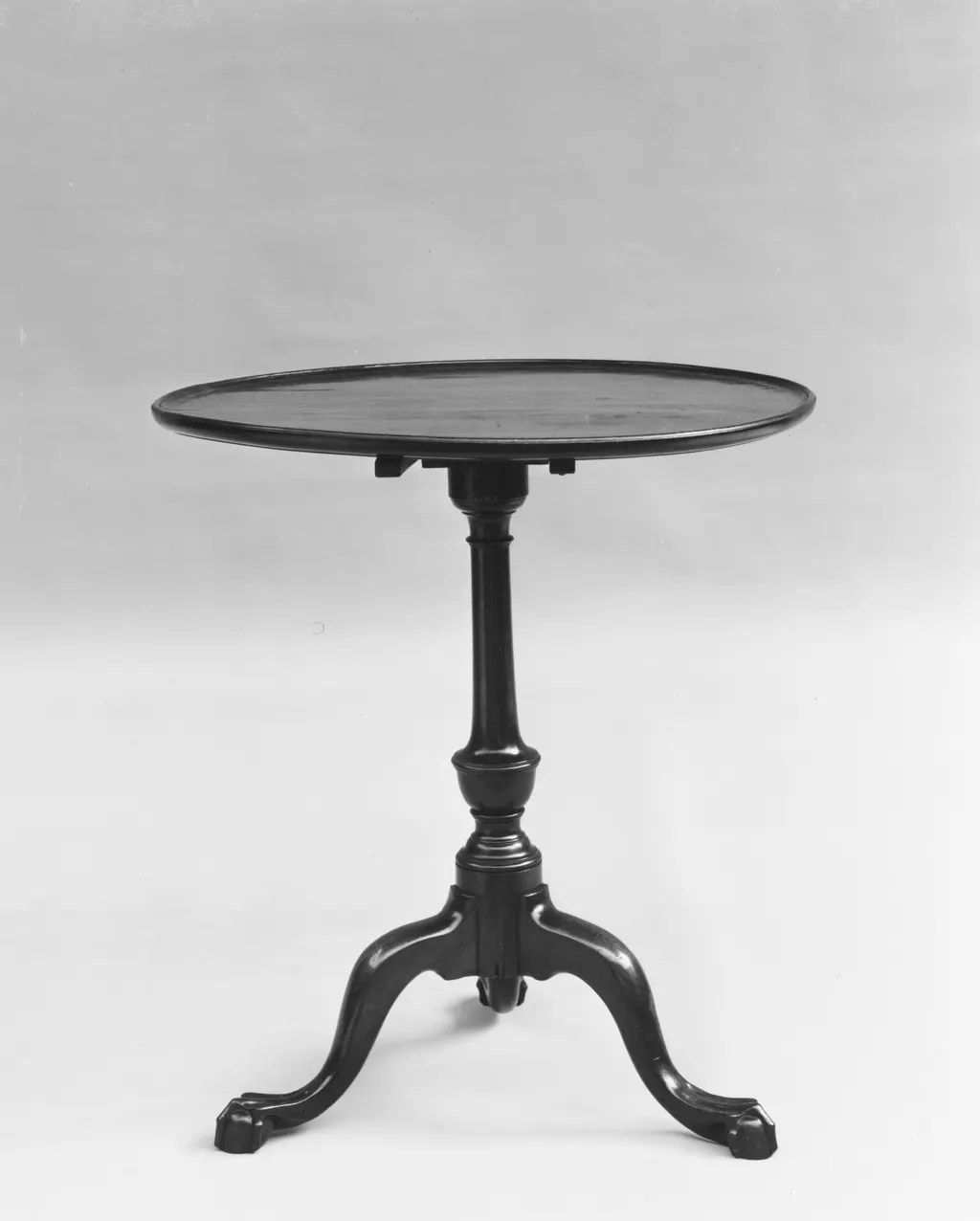
AmericanTea Table, 1750–90MahoganyThe Metropolitan Museum of Art, collection record. CC0 1.0 (Public Domain)
In the Victoria and Albert Museum there is a small British tea table made between 1725 and 1750. Its top is a single dished board of mahogany with a raised rim to stop cups sliding off. It looks modest beside the paintings and sculpture elsewhere in the building, yet it carries a remarkable amount of history. The V&A's catalogue explains that mahogany began arriving in Britain in significant quantities in the early 1720s, overwhelmingly from Jamaica, that it was a plantation product bound up with the transatlantic slave trade, and that felling it was often the work of enslaved labourers. The table also speaks of the new social ritual of tea, of a cabinetmaker's skill, and of a fashion that lasted, the museum says, from the mid-1720s to about 1770.
That is what the decorative arts offer: objects made to be used, which turn out to hold the whole world of the people who made and used them. This article explains what the term covers, why museums were founded specifically for such things, and how to look at any object, from a spoon to a carpet, with the same attention you might give a painting.
A useful but awkward term
"Decorative arts" usually means objects that are both functional and artistically designed: furniture, ceramics, glass, metalwork, textiles, jewellery, lacquer, enamels, clocks, bookbindings and more. Related terms include "applied arts" (art applied to useful things), "crafts" (often stressing the maker's hand) and "design" (often stressing planning for manufacture).
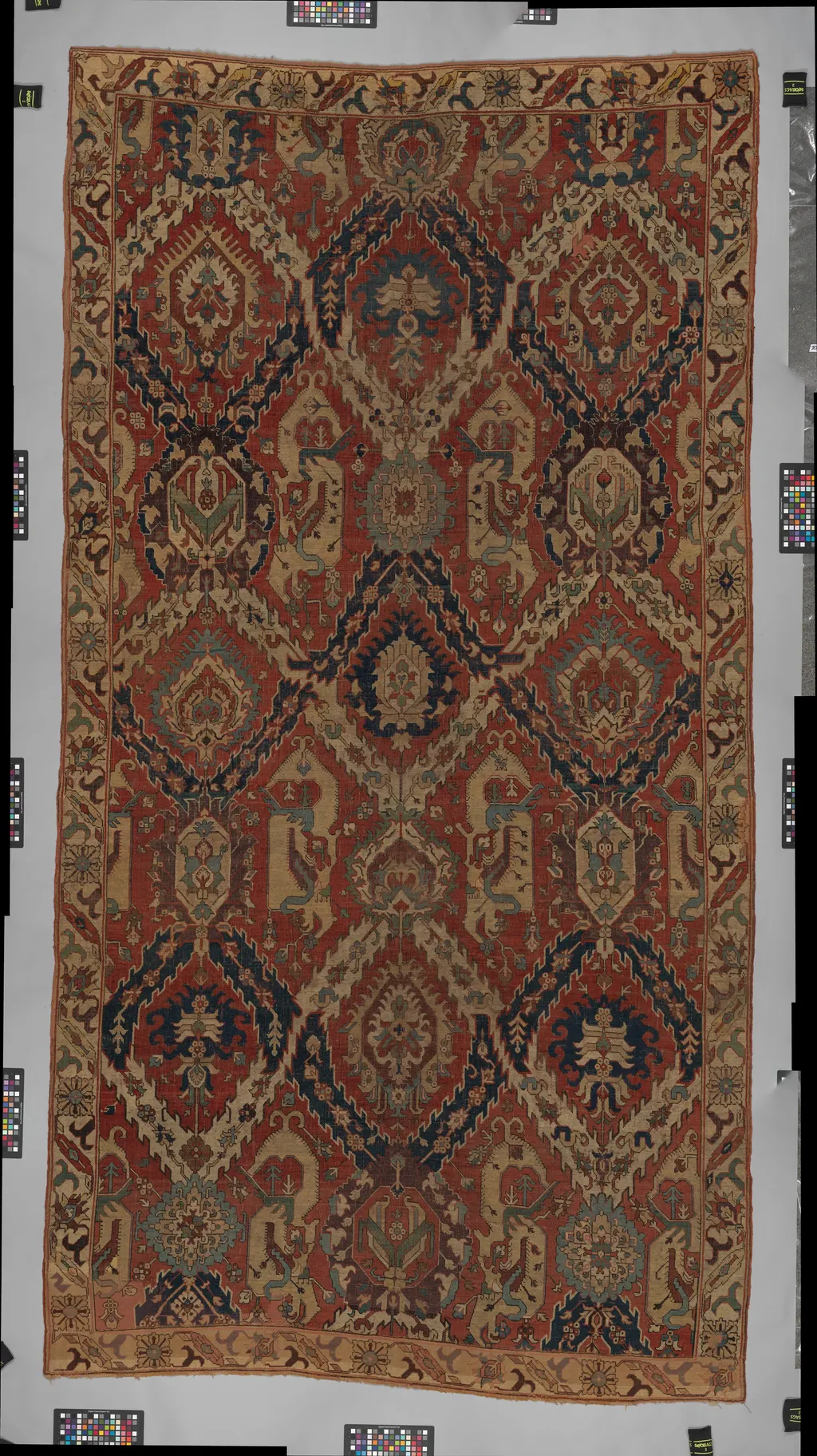
The phrase grew out of an old hierarchy that placed painting, sculpture and architecture at the top as the "fine" arts and treated everything else as lesser. That ranking would have puzzled many earlier societies. In Safavid Iran, a court carpet could be among the most prestigious objects of the age; in eighteenth-century Europe, rulers presented porcelain services to one another as diplomatic gifts. Today most historians use "decorative arts" as a practical label, not a judgement of value.
Museums built for things
The modern idea of the decorative arts museum was born in the nineteenth century, when industrial manufacturing raised anxious questions about quality and taste.
- London, 1852: After the Great Exhibition of 1851, the civil servant Henry Cole opened the Museum of Manufactures at Marlborough House, with the aim of educating the public and improving British design and manufacture. It moved to South Kensington in 1857 as the South Kensington Museum and was renamed the Victoria and Albert Museum in 1899.
- Vienna, 1863–64: Emperor Franz Joseph I founded the Imperial Royal Austrian Museum of Art and Industry, modelled on South Kensington; it opened in 1864 and is today the MAK.
- Paris: The Musée des Arts Décoratifs, whose collection was founded in 1905, occupies the Pavillon de Marsan wing of the Louvre palace.
These museums collected historic objects as models of excellence for designers and manufacturers. That purpose explains much about how their collections were formed and why they include casts, copies and samples as well as masterpieces.
The main families at a glance
| Family | Typical materials | Key techniques to recognise |
|---|---|---|
| Ceramics | Earthenware, stoneware, porcelain | Throwing, moulding, glazing, painting, transfer printing |
| Glass | Soda, potash and lead glass | Blowing, casting, cutting, engraving, enamelling |
| Metalwork | Silver, gold, bronze, pewter, iron | Raising, casting, chasing, engraving, filigree, enamel |
| Furniture | Oak, walnut, mahogany, veneers, gilding | Joinery, carving, marquetry, lacquer, upholstery |
| Textiles | Wool, silk, cotton, linen | Weaving, knotting, embroidery, printing, dyeing |
| Jewellery | Precious metals, gems, enamel | Setting, casting, granulation, engraving |
Each family has its own vocabulary and its own tests of age and quality. Good places to start are A Short History of Art Glass, How to Read an Oriental Rug and, for the meeting point of furniture and Art Nouveau, A Practical Guide to Gallé Furniture. Everything else is gathered under decorative arts.
Five questions for any object
You do not need specialist knowledge to begin. These five questions work equally well for a medieval chalice and a 1960s chair.
1. What is it made of?
Material sets the possibilities. Mahogany is dense and stable enough to be carved crisply and cut into wide boards; walnut gives beautiful figured veneers; porcelain can be thin and translucent where earthenware cannot. Ask why the maker chose this material, and what it cost.
2. How was it made?
Look for evidence of process: tool marks, joins, seams from a mould, the swirl of a potter's wheel, the slightly uneven pile of a hand-knotted carpet. Then ask how many people were involved. A single eighteenth-century porcelain plate might pass through the hands of modellers, throwers, kiln workers, painters and gilders.
3. What was it for?
Function shapes form. A tea table needs a rim; a mosque lamp needs to hang and glow; a cabinet built to display a collection needs glass doors and shelves. Imagine the object in use, in its original room, at its original height, in candlelight rather than gallery spotlights.
4. What does its ornament say?
Ornament is a language. Acanthus leaves, Chinese dragons, Gothic arches and Art Nouveau whiplash curves each signal a particular taste and moment. Designers learned that language from printed sources: Thomas Chippendale's The Gentleman and Cabinet-Maker's Director (1754) spread his furniture designs across Britain and beyond, and Owen Jones's The Grammar of Ornament (1856) gathered ornament from cultures around the world into a single reference book that shaped Victorian design.
5. Who made it, who owned it, and how did it get here?
Makers, patrons and owners give an object its human story. Signatures, marks and labels help, but so do inventories, bills and photographs. Provenance, the record of ownership, also raises ethical questions about how objects left their places of origin; our article on collecting art responsibly explores these.
Look closer: Next time you see a carved or inlaid object, find the place where hands would naturally touch it: a chair's arm, a drawer handle, a teapot's knob. Is the surface worn smoother or darker there? Wear in logical places is one of the most persuasive signs that an object has lived a long, used life.
Objects with large stories
The best decorative arts often reveal connections between distant places and people.
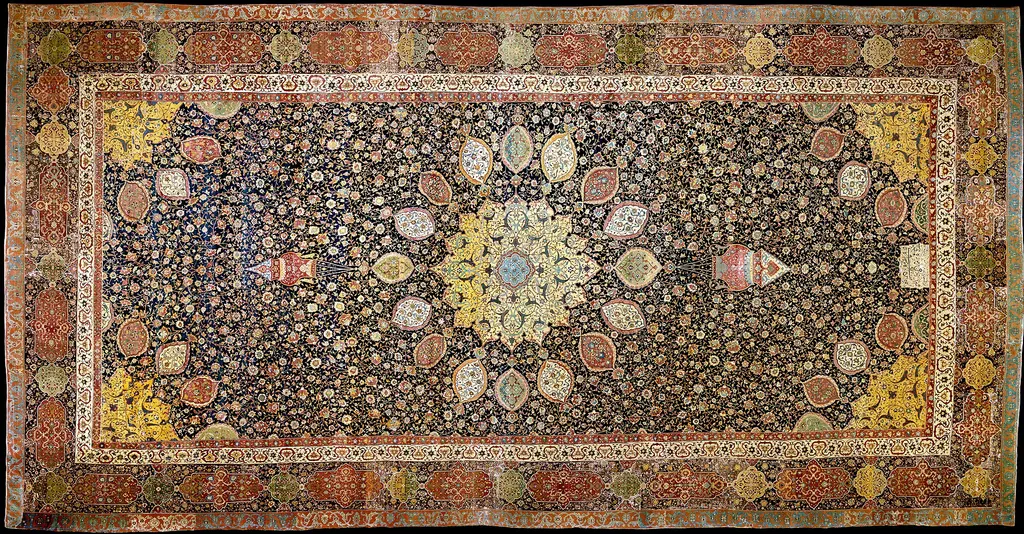
The Ardabil Carpet, now in the V&A, is dated 946 in the Islamic calendar (1539–40) and was probably made for the shrine of Shaykh Safi al-Din at Ardabil, the ancestral shrine of Iran's Safavid dynasty. It has about 5,300 knots in every ten-centimetre square. When it came on the market in London, William Morris inspected it for the museum and praised its "singular perfection"; the V&A bought it in 1893.
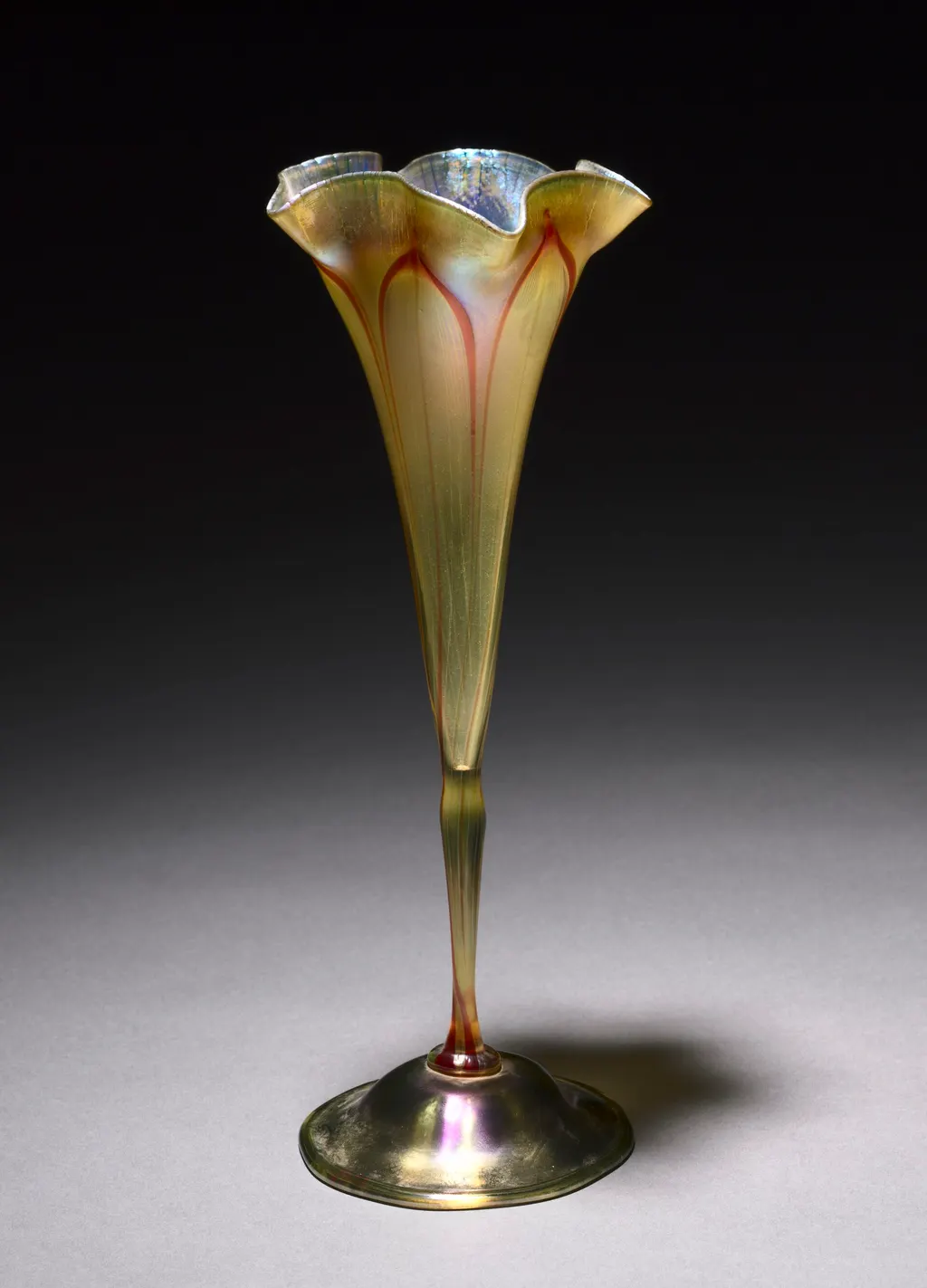
Louis Comfort Tiffany, working in New York at the end of the nineteenth century, named the iridescent blown glass from his furnaces Favrile, recalling an Old English word for "hand-wrought", to stress that each piece was handmade. His studios turned the decorative arts into a modern luxury industry while insisting on the artistry of craft, a tension that also animated the Arts and Crafts movement.
Starting to look
The easiest way in is to choose one category and follow it. Spend an hour in a museum's ceramics gallery, or study a single period room and try to name every material in it. Read labels for makers and dates, then ask the five questions above. At home, the same habits apply to inherited furniture or a market find. With practice, objects that once seemed merely pretty start to speak: of trade routes and workshops, of wealth and labour, and of the ordinary people who once poured tea at a little mahogany table.
Sources
- Building the Museum, Victoria and Albert Museum
- Tea table, Great Britain, 1725–1750, Victoria and Albert Museum
- The Ardabil Carpet, Victoria and Albert Museum
- Louis Comfort Tiffany (1848–1933), The Metropolitan Museum of Art, Heilbrunn Timeline of Art History
- A–Z of ceramics, Victoria and Albert Museum