Did Hendrick ter Brugghen Return to Italy?
The Utrecht Caravaggist Hendrick ter Brugghen, the long debate over a second Italian journey, and what early writers Cornelis de Bie and Houbraken recorded.
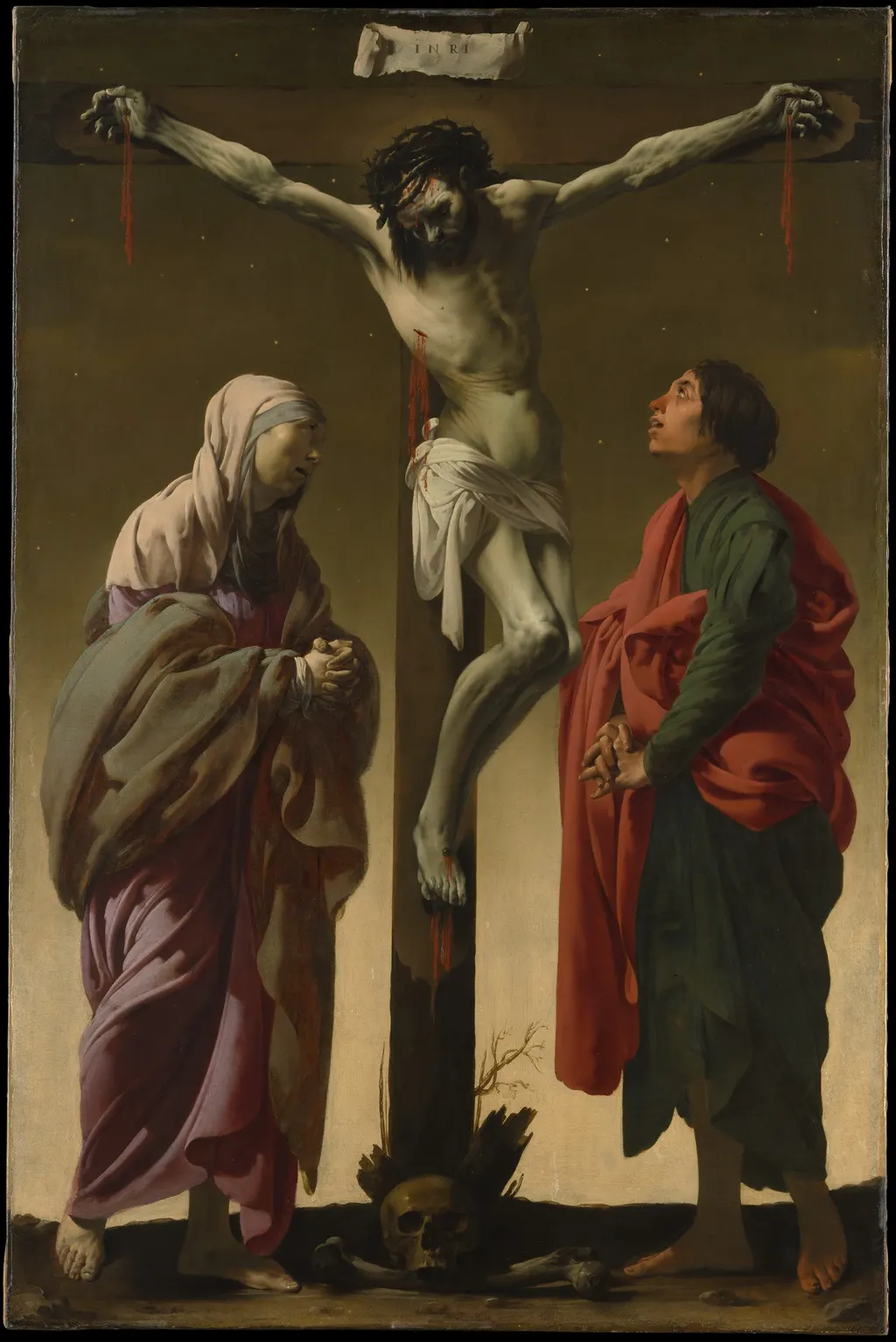
Hendrick ter BrugghenThe Crucifixion with the Virgin and Saint John, ca. 1624–25Oil on canvasThe Metropolitan Museum of Art, collection record. CC0 1.0 (Public Domain)
In Utrecht's Centraal Museum hangs a painting of tax collectors at a table, signed and dated 1621. A shaft of light falls from the left across their faces, coins and ledgers; Christ, half-hidden at the edge, points to Matthew, who points to himself in disbelief. The subject, The Calling of Saint Matthew, had been painted some twenty years earlier by Caravaggio for the Contarelli Chapel in Rome, and Hendrick ter Brugghen, who lived in Rome for years, can hardly have missed it. The question that has occupied scholars for decades is a narrower one: had he seen it once, as a young man, or did he travel back to Italy around 1620 to look again?
The answer matters because it shapes how we understand one of the most original painters of the Dutch seventeenth century, and the small group of artists known as the Utrecht Caravaggisti. This article sets out what is documented about Ter Brugghen's life, the arguments for and against a second journey, and what early biographers, including the Flemish writer Cornelis de Bie, actually said about him.
What the documents tell us
The bare facts of Ter Brugghen's life have been considerably refined by archival research since the 1980s.
- 1588: Probably born in The Hague, where his father was a bailiff in the service of the States of Holland. Early writers associate the family with Overijssel, and his son later gave paintings to Deventer, described by the biographer Arnold Houbraken as his father's birthplace.
- c. 1602 onwards: Trained, according to early sources, with the Utrecht painter Abraham Bloemaert.
- 1607: A document names him as a cadet in the army of Ernst Casimir of Nassau-Dietz, which casts doubt on the traditional claim that he left for Italy as early as 1604.
- Italy: He spent several years in Italy, mainly in Rome. No painting from this period has been securely identified.
- Summer 1614: Documented in Milan with another Utrecht painter, Thijman van Galen, on the way home. He was back in the Netherlands by the autumn.
- 1616: Joins the Utrecht painters' guild and marries Jacomijna Verbeeck.
- 1619: His earliest dated painting, an Adoration of the Magi, now in the Rijksmuseum.
- 1620–21: His fellow Utrecht painters Gerard van Honthorst and Dirck van Baburen return from Rome, and Caravaggio's influence on Ter Brugghen becomes stronger.
- 1 November 1629: Dies in Utrecht, possibly of plague, and is buried in the Buurkerk. About eighty paintings by him survive.
The case for a second journey
In the mid-twentieth century several scholars noticed that some of Ter Brugghen's Utrecht paintings of the early 1620s seemed to respond not only to Caravaggio, whom he could have studied before 1614, but to Italian painters whose relevant works were made later. The idea of a second visit, perhaps around 1619–21, was given wide currency by Benedict Nicolson's 1958 monograph on the painter.
The argument is attractive. It would explain why paintings such as The Calling of Saint Matthew (1621) and The Incredulity of Thomas (c. 1622, Rijksmuseum) feel so freshly Italian, and why some compositions resemble those of artists active in Rome and Genoa in the years around 1620. It also fits a pattern: Honthorst and Baburen were both in Rome until 1620, and a return visit by Ter Brugghen would place all three in contact with the same new work.
The case against
There is, however, no document placing Ter Brugghen in Italy after 1614. The Städel Museum's biography notes that a second trip in 1619–21 is possible but undocumented. The Rijksmuseum's catalogue entry for The Incredulity of Thomas goes further, stating that most recent scholars have rejected the idea.
Several considerations support the sceptics:
- He was settled in Utrecht. He had joined the guild, married and started a family by 1616, and his first dated paintings appear in 1619.
- Ideas travelled without painters. Prints, drawings, copies and the returning Honthorst and Baburen could all have brought Italian developments to Utrecht.
- Parallels can be coincidences. The Rijksmuseum entry notes, for example, that Bernardo Strozzi's version of the Incredulity of Thomas also reverses Caravaggio's composition and adds a fourth apostle, but that Strozzi's picture probably dates from later in the 1620s. The shared features may come from a common source rather than direct contact.
- Dating is uncertain. Scholars have dated key works differently. The same Rijksmuseum painting has been placed anywhere from about 1621 to the mid-1620s, which makes arguments based on precise sequences fragile.
Look closer: Compare Ter Brugghen with Caravaggio. Ter Brugghen's light is often cooler and more silvery, his colours paler, and his figures have a slightly awkward, almost archaic grace that some scholars link to his interest in earlier Netherlandish and German art, including prints by Lucas van Leyden and Albrecht Dürer. These are not simply borrowings from Italy.
What Cornelis de Bie recorded
Some of the most interesting evidence comes not from archives but from early writers on art.
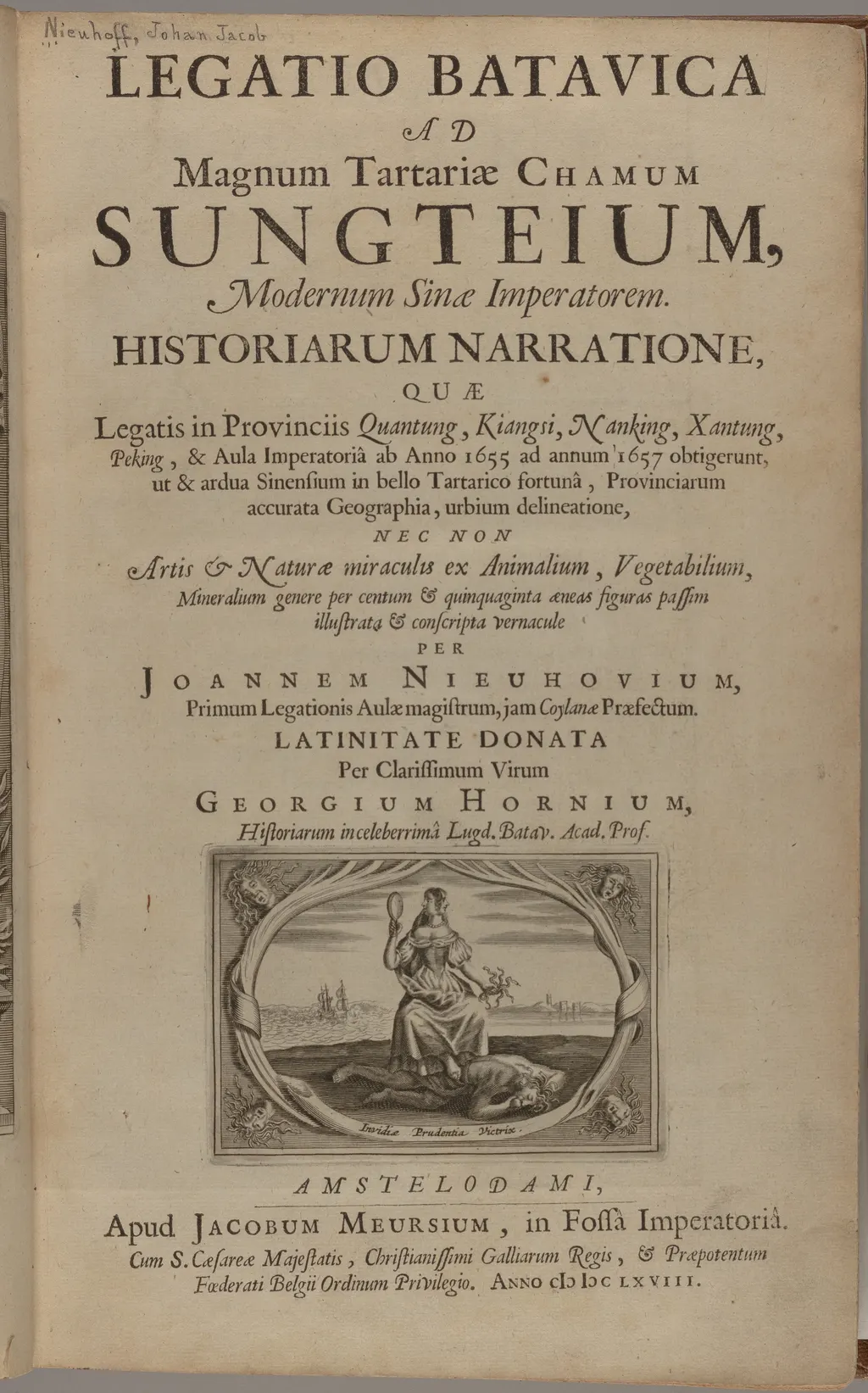
Cornelis de Bie (1627–c. 1715) was a notary and poet from Lier, near Antwerp. His Het Gulden Cabinet van de edel vry schilder-const, published in Antwerp in 1662 (with some copies dated 1661), is a collection of verse tributes and short biographies of painters, illustrated with engraved portraits.
A copy of the Gulden Cabinet in the Royal Library of Belgium in Brussels has, bound into it, a manuscript by De Bie containing short biographies of artists not included in the printed book. A transcription was published in the Flemish periodical De Vlaamsche School in 1884. Its entry on Ter Brugghen describes him as born in Overijssel in 1588, says that he went from Utrecht to Rome and returned about ten years later, records his death in Utrecht on 1 November 1629, and calls him an outstanding history painter in the Italian manner. It also repeats a story that Rubens, travelling through the Netherlands, singled out Ter Brugghen above the painters he met.
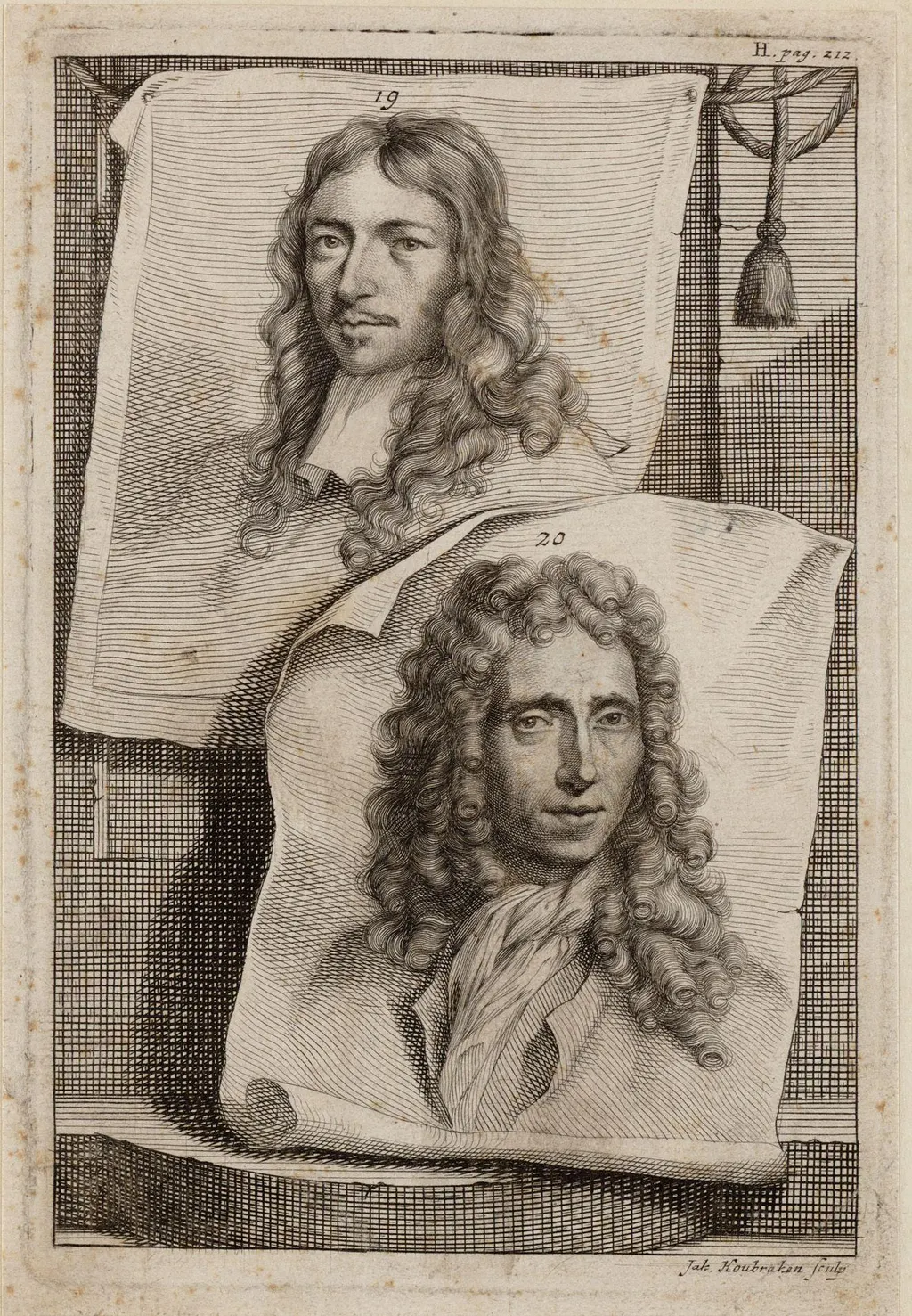
Arnold Houbraken, writing in his Groote Schouburgh in 1718, gives a similar picture: a long stay in Rome, about ten years, and the Rubens anecdote, which Houbraken himself treated with some suspicion because Joachim von Sandrart, who accompanied Rubens in the Netherlands, never mentioned it.
Neither account mentions a second journey. That silence does not settle the matter, since early biographers often compressed or omitted details, but the earliest tradition knows of one long Italian period only.
A painter in his own right
Whatever the answer, the debate can obscure Ter Brugghen's originality. The Metropolitan Museum's Crucifixion with the Virgin and Saint John (c. 1624–25) is a good example. Against a dark night sky, a gaunt Christ hangs above two mourners whose grief is expressed through stiff, angular gestures. The museum notes that the painting draws on late Gothic German art as much as on Italian models, perhaps through prints, to create a devotional image for a Catholic viewer in a Protestant republic.
Ter Brugghen was admired in his lifetime and largely forgotten afterwards. His reputation revived in the twentieth century, and today his works are among the highlights of Dutch collections in Utrecht, Amsterdam, London, New York and elsewhere.
Where to see his work
Begin with the Centraal Museum in Utrecht, home of The Calling of Saint Matthew, and the Rijksmuseum in Amsterdam, which holds The Incredulity of Thomas and the Adoration of the Magi. The Metropolitan Museum's Crucifixion is on view in New York, and the Städel in Frankfurt and other European museums hold further works.
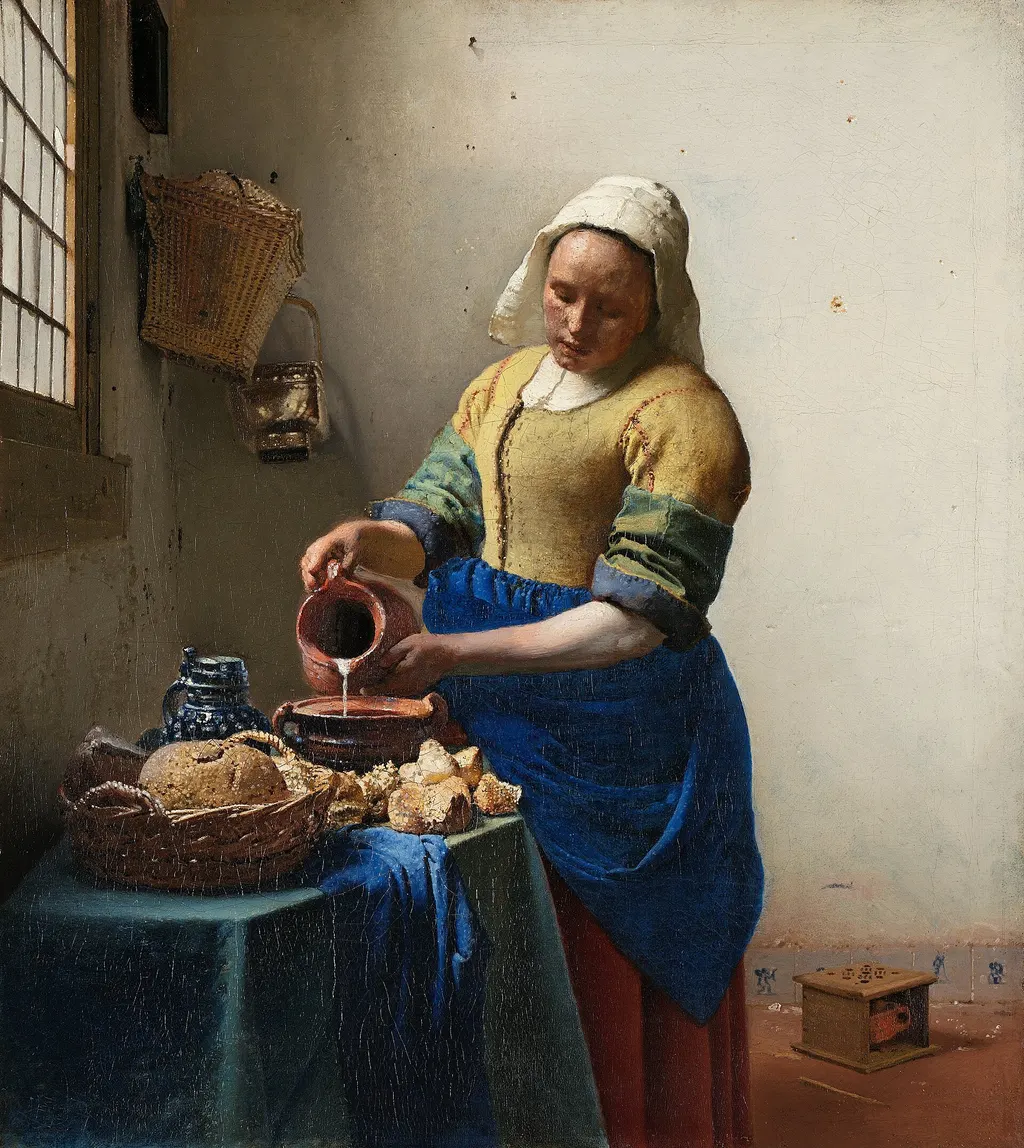
Ter Brugghen's teacher is the subject of our article on three scenes from the Historiae Aethiopicae by Abraham Bloemaert. For the wider picture, read Dutch Golden Age painting and what was the Baroque?, and for Delft a generation later, Vermeer and his milieu. Browse more under art history.
Sources
- The Incredulity of Thomas, Hendrick ter Brugghen, c. 1622 (catalogue entry), Rijksmuseum
- The Crucifixion with the Virgin and Saint John, Hendrick ter Brugghen, c. 1624–25, The Metropolitan Museum of Art
- Hendrick ter Brugghen (artist biography), Städel Museum
- Handschrift van Cornelis de Bie (De Vlaamsche School, 1884), DBNL
- Houbraken Translated: De groote schouburgh, vol. 1, pp. 130–139, RKD – Netherlands Institute for Art History