Creating a Home Art Space for Children
A practical guide to setting up a children's art corner at home: location, surfaces, storage, safe non-toxic materials, labels to check and displaying work.
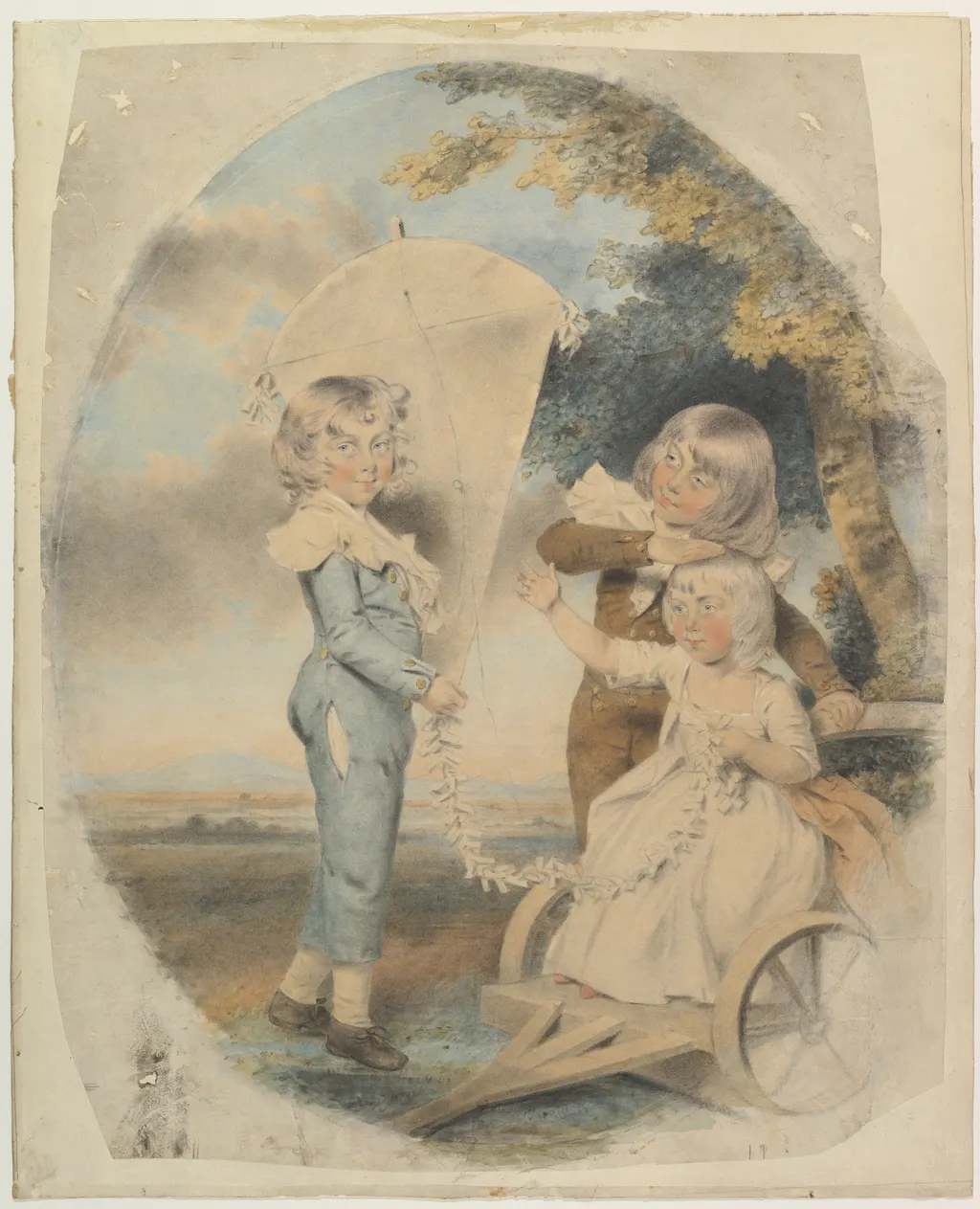
John DownmanThe Dyson Children, 1787Chalk, graphite and watercolorThe Metropolitan Museum of Art, collection record. CC0 1.0 (Public Domain)
Picture a corner of a kitchen on a wet Saturday. A small table is covered with an old oilcloth. A jam jar holds fat brushes, another holds crayons, and a roll of brown wrapping paper hangs from a curtain pole fixed low on the wall. Nothing in that corner cost much, and none of it is precious, which is precisely why it works. A child can sit down, make a mess and walk away without anyone saying "be careful" every thirty seconds.
A home art space does not need a spare room or a big budget. What it needs is a sensible place, washable surfaces, materials that are safe and easy to reach, and somewhere to put the results. This guide covers each of those, with particular attention to choosing materials that are genuinely suitable for children and to the labels that tell you so.
Choosing the spot
The best location is usually somewhere a child already spends time and an adult is nearby: a corner of the kitchen, a section of the dining table, the end of a playroom. Spaces tucked away in bedrooms tend to go unused, or used without supervision when it matters.
Look for:
- A washable floor. Tiles, vinyl or wood are far easier than carpet. If you only have carpet, a large plastic sheet, a cheap shower curtain or an old flat sheet that can go in the wash makes a good floor cover.
- Good light. Daylight from a window is ideal; add a lamp for winter afternoons.
- Water within reach. A nearby sink saves trips through the house with painty hands. Otherwise keep a bucket of water and an old towel at the table.
- Room to stand. Children often prefer to paint standing up. A table at the right height, or an easel, lets them move their whole arm.
Furniture and surfaces
A child-height table and chair matter more than anything else. When feet can rest on the floor and elbows sit comfortably on the table, children can concentrate on what they are making rather than on balancing.
Table covers: oilcloth, a wipe-clean tablecloth or a sheet of hardboard cut to size can protect a family table and be lifted off at dinner time. Newspaper is cheap but tends to stick to wet paint and transfers ink.
Walls: paper taped to a wall or door at the child's height gives a large vertical surface. A strip of blackboard paint or a roll of paper on a holder works well too. Test any tape on an inconspicuous patch of paint first.
Easel: a floor easel or a tabletop version encourages large, loose painting. A sheet of board propped against the wall does the same job.
Clothing: an apron, or simply an old adult shirt worn backwards with the sleeves rolled up, removes a great deal of worry.
Storage that children can manage
Children use what they can see and reach, and they tidy up more readily when everything has an obvious home.
- Open, low shelving or a trolley on wheels with shallow trays keeps materials visible.
- Clear containers or jars, each for one type of material: crayons, coloured pencils, felt-tips, glue sticks, scissors.
- Picture labels on boxes help younger children put things back.
- A paper drawer or flat box keeps sheets flat and clean.
- A "rescue box" for interesting packaging, fabric scraps, buttons, corks and lids feeds collage and model making.
- Higher storage for adult-only items: craft knives, hot glue guns, solvent-based products and anything with a cautionary label.
Rotate materials every few weeks. Putting away the felt-tips and bringing out oil pastels or chalk can make a familiar corner feel new.
Safe materials: what the labels mean
Most children's art materials are designed to be safe, but labelling differs between regions and it is worth knowing what to look for.
In the United States
Under the Labeling of Hazardous Art Materials Act, signed in 1988, art materials sold in the US must have their formulations evaluated by a toxicologist for chronic health hazards and carry a statement of conformance with the standard ASTM D-4236. That statement means the product has been reviewed and labelled appropriately, not that it is harmless: a product that carries cautionary warnings may also say "Conforms to ASTM D-4236". The US Consumer Product Safety Commission notes that the term "non-toxic" has no regulatory definition.
The non-profit Art & Creative Materials Institute (ACMI) runs a certification programme with two seals:
- AP (Approved Product) seal: a toxicologist has certified that the product contains no materials in sufficient quantities to be toxic or injurious to people, including children. ACMI recommends AP products for children in sixth grade (about age 11 to 12) and younger.
- CL (Cautionary Labeling) seal: the product has known hazards and is labelled with instructions for safe use. ACMI states that CL products should never be given to children in sixth grade or younger.
In the UK and Europe
Art materials intended for children are generally treated as toys and must meet the European toy safety standard EN 71. Several parts are relevant: EN 71-3 limits the migration of certain elements, such as lead, from toy materials, and EN 71-7 sets specific requirements for finger paints. Products that conform carry the CE mark (and, in Great Britain, the UKCA mark may also appear). Adult art materials are not tested to these standards, which is a good reason to keep professional supplies separate.
Safety: Buy children's materials labelled with the AP seal (US) or as conforming to EN 71 (UK and Europe). Keep adult materials, especially anything with a warning label, aerosols, solvents, solvent-based markers, and powdered pigments or dry clay, out of children's reach. Adults should mix any powdered paint so children do not breathe the dust, and premixed modelling clay is preferable to dry clay powder for young children.
A starter kit by age
There is no need to buy everything at once. The table below is a guide to what tends to work well, not a set of rules: children differ widely, and supervision should always match the child.
| Material | Toddlers and preschoolers | Primary age | Notes |
|---|---|---|---|
| Chunky crayons | Yes | Yes | Choose ones labelled for young children |
| Washable felt-tip pens | With supervision | Yes | Water-based, not solvent-based |
| Ready-mixed poster or tempera paint | Yes, with thick brushes | Yes | Buy ready-mixed rather than powder |
| Finger paint | Yes | Yes | Look for EN 71-7 or AP seal |
| Watercolour pans | Rarely | Yes | Easy to store and clean up |
| Coloured pencils | Older preschoolers | Yes | Triangular shapes are easier to grip |
| Oil pastels and chalk pastels | With supervision | Yes | Chalk pastels are dusty: use outdoors or blow dust away from faces |
| Air-dry or modelling clay | Yes, premixed | Yes | Avoid dry clay powder |
| Child-safe scissors | Rounded tips, supervised | Yes | Teach carrying with blades closed |
| Glue sticks and PVA glue | Yes | Yes | Avoid hot glue guns without an adult |
Paper is the most useful supply of all. A ream of inexpensive cartridge paper, a roll of brown or white wrapping paper for big work, and a few sheets of thicker paper for painting will cover most needs. For an adult's view of what is worth buying, see our guide to art materials for beginners.
Setting up a routine
A few simple habits make a home art space easier to live with:
- Agree the boundaries. Paint stays at the table; clay stays on the board.
- Set out only what is needed. Two or three paint colours often lead to more interesting work than twelve.
- Build in tidying time. Ten minutes before the end, everyone helps wash brushes and put lids back on. A brush left to dry on its bristles is ruined.
- Keep wipes and a cloth to hand for spills.
- Let unfinished work wait. A shelf or tray where a model can be left until tomorrow respects the child's effort.
Displaying and keeping children's art
Children's work deserves to be seen, but most homes cannot keep everything.
- A rotating gallery. A length of string or wire with pegs, a cork board or a magnetic strip lets new pictures replace old ones quickly. Ask the child to choose what goes up.
- Frames with front-opening backs make swapping pictures easy.
- A portfolio for each year. A large folder or box, labelled by year, holds the favourites.
- Photograph the rest. A quick photograph keeps the memory of large or fragile work when the original cannot stay.
- Protect the keepers. Keep favourite pieces away from direct sunlight and damp; our guide to caring for art at home applies to children's paintings as much as to old prints.
Talking about the work matters as much as hanging it. Questions such as "Tell me about this part" or "How did you make that colour?" invite children to describe their choices, which is the beginning of looking at all art more closely. Our article on teaching art appreciation at home develops that idea.
A checklist before you start
- A washable table and floor, or covers for both
- Child-height seating and good light
- Water, cloths and aprons within reach
- Low, labelled storage for children's materials; high storage for adult ones
- Materials carrying the AP seal or EN 71 conformity
- A place to dry work and a place to display it
When the space is ready, try some of our art activities inspired by famous artists, and find more ideas in art for children.
Sources
- Materials Safety: AP and CL seals, The Art & Creative Materials Institute (ACMI)
- Art Materials: Frequently Asked Questions, U.S. Consumer Product Safety Commission
- Art Materials: Business Guidance, U.S. Consumer Product Safety Commission
- BS EN 71-7:2025 Safety of toys. Finger paints. Requirements and test methods, BSI